Compare commits
27 Commits
63d8f6b38e
...
fix/komga-
| Author | SHA1 | Date | |
|---|---|---|---|

|
805f225618 | ||
|
|
4f9cbd0e90 | ||
|
|
08029b9e37 | ||
|
|
1133720b5b | ||
|
|
bc2ef6cbec | ||
|
|
9c36f9b480 | ||
|
|
4e043f7b94 | ||
|
|
9e4e38535f | ||
|
|
96380fdf5f | ||
|
|
aff8931eaf | ||
|
|
69a6a1a62f | ||
|
|
9ffe457e5f | ||
|
|
e219d241bc | ||
|
|
1b0969d537 | ||
|
|
a830293736 | ||
|
|
4f7558050b | ||
|
|
6194f26f00 | ||
|
|
39da9cf9b5 | ||
|
|
a04d818479 | ||
|
|
8cee7c3ea5 | ||
|
|
409de579da | ||
|
|
e8f01387d3 | ||
|
|
409a7366ac | ||
|
|
f3d0980b73 | ||
|
|
455853cd43 | ||
|
|
e253d18335 | ||
|
|
a4b100feea |
@@ -25,9 +25,14 @@ Triage first, then one of two paths:
|
||||
Escalate mid-flight if a light task grows — touches a default, needs a new script or service, or
|
||||
reveals a deeper problem.
|
||||
|
||||
**Standing rule:** ship the simplest solution that works. Complexity is bought only by a
|
||||
**measurement** showing a concrete, user-visible cost on a real host — never by reasoning about
|
||||
hypothetical performance.
|
||||
**Standing rule:** ship the simplest solution that works, and build it out of what already
|
||||
exists — a `.templates/` module, an existing cont-init script, the pattern a sibling add-on
|
||||
already uses for the same problem. 120+ add-ons are maintained by one person: a homogeneous repo
|
||||
where every add-on solves a problem the same way is worth more than a locally nicer bespoke
|
||||
design. Prefer reusing or extending over adding a parallel implementation, and when you must add
|
||||
something new, spell it the way the rest of the repo spells it (naming, option names, script
|
||||
numbering, file layout). Complexity is bought only by a **measurement** showing a concrete,
|
||||
user-visible cost on a real host — never by reasoning about hypothetical performance.
|
||||
|
||||
**Repo layout.** `alexbelgium/hassio-addons`; each add-on is a top-level directory. This skill is
|
||||
checked in at `.claude/skills/hassio-addon-workflow/` (canonical copy). Set the skill root once,
|
||||
@@ -73,7 +78,14 @@ before it costs a full analysis pass. Measurement methodology, gotchas, and real
|
||||
|
||||
## 3. Plan — choose the mechanism level, then Codex reviews it (full loop)
|
||||
|
||||
Rank mechanisms, pick the lowest (simplest) one that solves it, and state the choice in the plan:
|
||||
Look for prior art first: grep `.templates/` and the other add-ons for something that already
|
||||
solves this (`grep -rl "<knob or pattern>" --exclude-dir=.git .` — search everything, not just
|
||||
`*.sh`: the mechanism may live in a `Dockerfile`'s `ARG MODULES=` or an extensionless s6 `run`
|
||||
file). If an add-on already handles it, the plan is "do what that one does" — say so, and say why
|
||||
the existing mechanism can't be reused if you're not reusing it.
|
||||
|
||||
Then rank mechanisms, pick the lowest (simplest) one that solves it, and state the choice in the
|
||||
plan:
|
||||
|
||||
1. A config value — an option, a schema constraint, an existing env var.
|
||||
2. An existing knob the base image already reads (`MAX_RES`, `DRINODE`, `SELKIES_*`).
|
||||
@@ -110,7 +122,13 @@ not just the happy path.
|
||||
|
||||
Before requesting review, check: did the diff stay at the ladder level chosen in step 3? Can this
|
||||
be solved by deleting instead of adding? Is the fix bigger than what it fixes? How does it fail in
|
||||
three years? Case studies of what happens when this check is skipped: `references/simplify.md`.
|
||||
three years? And on reuse: does any hunk reimplement something `.templates/`, another script in
|
||||
this add-on, or a sibling add-on already does — and if a future add-on hits this same problem,
|
||||
will it find one way to solve it or two? Fold a near-duplicate into the existing mechanism, or
|
||||
justify the divergence in the PR body — but never at the cost of an isolation rule
|
||||
`references/traps.md` documents: scripts shared by symlink with the webtop add-ons take a new
|
||||
numbered script, not an edit. Case studies of what happens when this check is skipped:
|
||||
`references/simplify.md`.
|
||||
|
||||
## 6. Codex attacks the code (full loop only)
|
||||
|
||||
|
||||
402
.github/generate_map.py
vendored
@@ -3,17 +3,20 @@
|
||||
Generate a static PNG world map colour-coded by the percentage of your
|
||||
stargazers that come from each country. The script maintains a CSV
|
||||
in ".github/stargazer_countries.csv" cache so that locations are only looked
|
||||
up once (unless the country entry is blank).
|
||||
up once. Blank answers are cached too and retried at most every RECHECK_DAYS,
|
||||
no more than MAX_RECHECKS_PER_RUN re-checks per run.
|
||||
"""
|
||||
|
||||
import csv
|
||||
import datetime
|
||||
import math
|
||||
import os
|
||||
import sys
|
||||
import time
|
||||
from collections import Counter
|
||||
from pathlib import Path
|
||||
|
||||
import plotly.express as px
|
||||
import plotly.graph_objects as go
|
||||
import pycountry
|
||||
import requests
|
||||
from geopy.geocoders import Nominatim
|
||||
@@ -25,12 +28,87 @@ GITHUB_TOKEN = os.getenv("GITHUB_TOKEN") # provided by workflow
|
||||
CSV_PATH = Path(".github/stargazer_countries.csv")
|
||||
PNG_PATH = Path(".github/stargazer_map.png")
|
||||
|
||||
# ---- Cache policy -----------------------------------------------------------
|
||||
# Most blank rows are permanent: the user simply has no public "location" on
|
||||
# their profile. Re-asking GitHub and Nominatim for them every week is ~1700
|
||||
# wasted requests per run, so a blank answer is cached too and only refreshed
|
||||
# after RECHECK_DAYS. A row with no "last_checked" (i.e. written before the
|
||||
# column existed) counts as never checked and is looked up once, which
|
||||
# stamps it.
|
||||
RECHECK_DAYS = 90
|
||||
|
||||
# Cap on how many already-checked rows one run may *re*-check, oldest first.
|
||||
# It applies only to rows that carry a real last_checked date and have since
|
||||
# expired: left uncapped, they all fall due on the same day and land as one
|
||||
# spike. Rows that have never been checked -- new stargazers, and every row
|
||||
# migrated from the pre-"last_checked" CSV -- are always looked up in full, so
|
||||
# the first run after this lands still sweeps the whole backlog.
|
||||
MAX_RECHECKS_PER_RUN = 200
|
||||
|
||||
# ---- Rendering theme --------------------------------------------------------
|
||||
# Dark, opaque panel: GitHub does not swap the image between README themes, so
|
||||
# a single background has to work in both. A dark canvas with a bright
|
||||
# sequential ramp stays readable on light and dark pages alike.
|
||||
BG = "#0d1117" # page / ocean
|
||||
LAND = "#2b323c" # countries with zero stargazers (still visible)
|
||||
BORDER = "#0d1117" # country outlines, same as background
|
||||
FG = "#e6edf3" # primary text
|
||||
MUTED = "#8b98a5" # secondary text
|
||||
|
||||
# Viridis truncated at 35 %: even a single stargazer gets a colour that is
|
||||
# clearly distinct from the empty-land grey.
|
||||
SCALE = ["#2c728e", "#21918c", "#35b779", "#90d743", "#fde725"]
|
||||
|
||||
# pycountry names that are too long / too formal for a top-5 list
|
||||
SHORT_NAMES = {
|
||||
"Russian Federation": "Russia",
|
||||
"Korea, Republic of": "South Korea",
|
||||
"Korea, Democratic People's Republic of": "North Korea",
|
||||
"Iran, Islamic Republic of": "Iran",
|
||||
"Taiwan, Province of China": "Taiwan",
|
||||
"Viet Nam": "Vietnam",
|
||||
"Moldova, Republic of": "Moldova",
|
||||
"Bolivia, Plurinational State of": "Bolivia",
|
||||
"Venezuela, Bolivarian Republic of": "Venezuela",
|
||||
"Tanzania, United Republic of": "Tanzania",
|
||||
"Syrian Arab Republic": "Syria",
|
||||
}
|
||||
|
||||
HEADERS = {
|
||||
"Authorization": f"token {GITHUB_TOKEN}",
|
||||
"Accept": "application/vnd.github.v3+json",
|
||||
}
|
||||
GEOL = Nominatim(user_agent="gh-stargazer-map")
|
||||
|
||||
# Non-answers that Nominatim happily resolves to a real place: "Earth" is a
|
||||
# town in Texas, "Remote" is a settlement in Oregon. Matched on the whole
|
||||
# stripped, lowercased string only -- "Earth, TX" is someone's actual address
|
||||
# and must still geocode.
|
||||
JUNK_LOCATIONS = {
|
||||
"127.0.0.1",
|
||||
"/dev/null",
|
||||
"anywhere",
|
||||
"earth",
|
||||
"everywhere",
|
||||
"here",
|
||||
"home",
|
||||
"internet",
|
||||
"localhost",
|
||||
"mars",
|
||||
"moon",
|
||||
"n/a",
|
||||
"none",
|
||||
"nowhere",
|
||||
"null",
|
||||
"planet earth",
|
||||
"remote",
|
||||
"space",
|
||||
"the internet",
|
||||
"unknown",
|
||||
"world",
|
||||
"worldwide",
|
||||
}
|
||||
|
||||
|
||||
# -----------------------------------------------------------------------------
|
||||
|
||||
@@ -52,20 +130,50 @@ def fetch_stargazer_usernames():
|
||||
return [s["login"] for s in github_paginated(url)]
|
||||
|
||||
|
||||
def _checked_date(value):
|
||||
"""Normalise a last_checked cell: a non-ISO-date value reads as never."""
|
||||
value = (value or "").strip()
|
||||
try:
|
||||
datetime.date.fromisoformat(value)
|
||||
except ValueError:
|
||||
return ""
|
||||
return value
|
||||
|
||||
|
||||
def load_cache():
|
||||
"""Map each username to (country, last_checked). Reads 2- and 3-column CSVs."""
|
||||
if not CSV_PATH.exists():
|
||||
return {}
|
||||
with CSV_PATH.open(newline="", encoding="utf-8") as f:
|
||||
return {row["username"]: row["country"] for row in csv.DictReader(f)}
|
||||
return {
|
||||
row["username"]: (
|
||||
row["country"],
|
||||
_checked_date(row.get("last_checked")),
|
||||
)
|
||||
for row in csv.DictReader(f)
|
||||
}
|
||||
|
||||
|
||||
def save_cache(cache):
|
||||
"""Write the cache back as username,country,last_checked."""
|
||||
CSV_PATH.parent.mkdir(parents=True, exist_ok=True)
|
||||
with CSV_PATH.open("w", newline="", encoding="utf-8") as f:
|
||||
w = csv.writer(f)
|
||||
w.writerow(["username", "country"])
|
||||
for user, country in sorted(cache.items()):
|
||||
w.writerow([user, country or ""])
|
||||
w.writerow(["username", "country", "last_checked"])
|
||||
for user, (country, last_checked) in sorted(cache.items()):
|
||||
w.writerow([user, country or "", last_checked])
|
||||
|
||||
|
||||
def needs_lookup(entry, cutoff):
|
||||
"""True if this entry must be (re)queried. entry is None if absent."""
|
||||
if entry is None:
|
||||
return True # new stargazer
|
||||
country, last_checked = entry
|
||||
if country:
|
||||
return False # a known country never changes here
|
||||
if not last_checked:
|
||||
return True # blank, never checked (pre-"last_checked" row)
|
||||
return last_checked < cutoff # blank, and stale enough to retry
|
||||
|
||||
|
||||
def username_to_country(login):
|
||||
@@ -75,47 +183,223 @@ def username_to_country(login):
|
||||
loc = (resp.json() or {}).get("location") or ""
|
||||
if not loc.strip():
|
||||
return ""
|
||||
if loc.strip().strip(".!").lower() in JUNK_LOCATIONS:
|
||||
return ""
|
||||
try:
|
||||
g = GEOL.geocode(loc, language="en", timeout=10)
|
||||
g = GEOL.geocode(loc, language="en", addressdetails=True, timeout=10)
|
||||
except Exception:
|
||||
return ""
|
||||
if not g or "display_name" not in g.raw:
|
||||
return ""
|
||||
# take the last comma-separated component that matches a country
|
||||
for part in reversed(g.raw["display_name"].split(",")):
|
||||
part = part.strip()
|
||||
# Use the ISO code from the structured address: Nominatim's English display
|
||||
# names ("Russia", "Turkey", "Ivory Coast") do not all match pycountry's ISO
|
||||
# names ("Russian Federation", "Türkiye", "Côte d'Ivoire").
|
||||
code = ((g.raw.get("address") or {}).get("country_code") or "") if g else ""
|
||||
country = pycountry.countries.get(alpha_2=code.upper()) if code else None
|
||||
return country.name if country else ""
|
||||
|
||||
|
||||
def count_by_country(cache):
|
||||
"""Counter of country name -> stargazers, ignoring blank locations."""
|
||||
return Counter(country for country, _ in cache.values() if country)
|
||||
|
||||
|
||||
def _log_ticks(lo, hi):
|
||||
"""Colourbar ticks at ... 0.1, 0.3, 1, 3, 10, 30 ... spanning [lo, hi]."""
|
||||
candidates = [m * 10**k for k in range(-3, 3) for m in (1, 3)]
|
||||
ticks = [t for t in candidates if lo / 1.5 <= t <= hi]
|
||||
return ticks or [hi]
|
||||
|
||||
|
||||
def _fmt_pct(value):
|
||||
"""1 -> '1%', 0.3 -> '0.3%' -- no trailing zeros."""
|
||||
return f"{value:.2f}".rstrip("0").rstrip(".") + "%"
|
||||
|
||||
|
||||
def build_figure(counts, total_stargazers):
|
||||
"""Build the choropleth figure from a {country name: stargazers} mapping."""
|
||||
by_iso = {}
|
||||
for name, n in counts.items():
|
||||
try:
|
||||
country = pycountry.countries.lookup(part).name
|
||||
return country
|
||||
code = pycountry.countries.lookup(name).alpha_3
|
||||
except LookupError:
|
||||
pass
|
||||
return ""
|
||||
print("Skip unknown country:", name)
|
||||
continue
|
||||
# two spellings can resolve to the same ISO code, so accumulate
|
||||
by_iso[code] = by_iso.get(code, 0) + n
|
||||
|
||||
iso = list(by_iso)
|
||||
vals = [by_iso[k] for k in iso]
|
||||
# count only what is actually drawn, so the caption matches the map
|
||||
located = sum(vals) or 1
|
||||
pcts = [v / located * 100 for v in vals]
|
||||
lo, hi = (min(pcts), max(pcts)) if pcts else (1.0, 1.0)
|
||||
|
||||
def build_choropleth(percent_by_iso):
|
||||
iso, vals = zip(*percent_by_iso.items())
|
||||
fig = px.choropleth(
|
||||
locations=list(iso),
|
||||
locationmode="ISO-3",
|
||||
color=list(vals),
|
||||
color_continuous_scale="Greens",
|
||||
range_color=(0, max(vals) if vals else 1),
|
||||
# The distribution is heavily long-tailed (the top country holds ~200x the
|
||||
# share of the tail), so a linear ramp collapses everything but a handful
|
||||
# of countries into the first colour step. Colour on log10 of the share.
|
||||
ticks = _log_ticks(lo, hi)
|
||||
fig = go.Figure(
|
||||
go.Choropleth(
|
||||
locations=iso,
|
||||
locationmode="ISO-3",
|
||||
z=[math.log10(p) for p in pcts],
|
||||
zmin=math.log10(lo) - 0.15, # keep the smallest share off the floor
|
||||
zmax=math.log10(hi),
|
||||
colorscale=SCALE,
|
||||
marker_line_color=BORDER,
|
||||
marker_line_width=0.5,
|
||||
colorbar=dict(
|
||||
title=dict(
|
||||
text="share of located stargazers (log scale)",
|
||||
font=dict(color=MUTED, size=13),
|
||||
side="top",
|
||||
),
|
||||
orientation="h",
|
||||
x=0.52,
|
||||
y=0.02,
|
||||
xanchor="center",
|
||||
yanchor="bottom",
|
||||
thickness=12,
|
||||
len=0.34,
|
||||
outlinewidth=0,
|
||||
tickvals=[math.log10(t) for t in ticks],
|
||||
ticktext=[_fmt_pct(t) for t in ticks],
|
||||
tickfont=dict(color=MUTED, size=12),
|
||||
),
|
||||
)
|
||||
)
|
||||
fig.update_layout(
|
||||
coloraxis_colorbar=dict(
|
||||
title="% stargazers",
|
||||
orientation="h", # <-- échelle horizontale
|
||||
x=0.5, # <-- centré
|
||||
y=0, # <-- tout en bas
|
||||
xanchor="center",
|
||||
yanchor="bottom",
|
||||
thickness=15,
|
||||
len=0.7, # <-- longueur de l'échelle, ajustable
|
||||
|
||||
fig.update_geos(
|
||||
projection_type="natural earth",
|
||||
showframe=False,
|
||||
showcoastlines=False,
|
||||
showland=True,
|
||||
landcolor=LAND,
|
||||
showocean=True,
|
||||
oceancolor=BG,
|
||||
showlakes=False,
|
||||
bgcolor=BG,
|
||||
lataxis_range=[-56, 84], # crop Antarctica, it is always empty
|
||||
lonaxis_range=[-176, 186],
|
||||
domain=dict(x=[0.0, 1.0], y=[0.04, 0.92]),
|
||||
)
|
||||
|
||||
repo = REPO or "this repository"
|
||||
caption = (
|
||||
f"{total_stargazers:,} stargazers"
|
||||
f" | {located:,} mapped to a country"
|
||||
f" | {len(by_iso)} countries"
|
||||
)
|
||||
annotations = [
|
||||
dict(
|
||||
text=f"<b>Stargazers of {repo}</b>",
|
||||
x=0.012,
|
||||
y=0.985,
|
||||
xref="paper",
|
||||
yref="paper",
|
||||
xanchor="left",
|
||||
yanchor="top",
|
||||
showarrow=False,
|
||||
font=dict(color=FG, size=25),
|
||||
),
|
||||
dict(
|
||||
text=caption,
|
||||
x=0.012,
|
||||
y=0.925,
|
||||
xref="paper",
|
||||
yref="paper",
|
||||
xanchor="left",
|
||||
yanchor="top",
|
||||
showarrow=False,
|
||||
font=dict(color=MUTED, size=15),
|
||||
),
|
||||
dict(
|
||||
text="Countries in grey have no located stargazer.<br>"
|
||||
"Location is read from the public GitHub profile,<br>"
|
||||
"so the map covers the located subset only.<br>"
|
||||
"Country lookup by Nominatim geocoding,<br>"
|
||||
"data © OpenStreetMap contributors.",
|
||||
x=0.988,
|
||||
y=0.05,
|
||||
xref="paper",
|
||||
yref="paper",
|
||||
xanchor="right",
|
||||
yanchor="bottom",
|
||||
align="right",
|
||||
showarrow=False,
|
||||
font=dict(color=MUTED, size=12),
|
||||
),
|
||||
]
|
||||
|
||||
# Top 5, laid out as two separate annotations (names, share) so each column
|
||||
# stays aligned whatever the country name length -- HTML text in an SVG
|
||||
# annotation collapses padding spaces, so a monospace table would not line
|
||||
# up.
|
||||
top = counts.most_common(5)
|
||||
if top:
|
||||
base_y = 0.40
|
||||
columns = [
|
||||
(
|
||||
0.022,
|
||||
"left",
|
||||
"<br>".join(
|
||||
f"{i}. {SHORT_NAMES.get(name, name)}"
|
||||
for i, (name, _) in enumerate(top, 1)
|
||||
),
|
||||
FG,
|
||||
),
|
||||
(
|
||||
0.215,
|
||||
"right",
|
||||
"<br>".join(f"{n / located * 100:.1f}%" for _, n in top),
|
||||
FG,
|
||||
),
|
||||
]
|
||||
annotations.append(
|
||||
dict(
|
||||
text="<b>TOP COUNTRIES</b>",
|
||||
x=0.022,
|
||||
y=base_y,
|
||||
xref="paper",
|
||||
yref="paper",
|
||||
xanchor="left",
|
||||
yanchor="top",
|
||||
showarrow=False,
|
||||
font=dict(color=MUTED, size=13),
|
||||
)
|
||||
)
|
||||
annotations += [
|
||||
dict(
|
||||
text=text,
|
||||
x=x,
|
||||
y=base_y - 0.055,
|
||||
xref="paper",
|
||||
yref="paper",
|
||||
xanchor=anchor,
|
||||
yanchor="top",
|
||||
align=anchor,
|
||||
showarrow=False,
|
||||
font=dict(color=color, size=15),
|
||||
)
|
||||
for x, anchor, text, color in columns
|
||||
]
|
||||
|
||||
fig.update_layout(
|
||||
width=1240,
|
||||
height=680,
|
||||
paper_bgcolor=BG,
|
||||
plot_bgcolor=BG,
|
||||
margin=dict(l=0, r=0, t=0, b=0),
|
||||
annotations=annotations,
|
||||
)
|
||||
PNG_PATH.parent.mkdir(parents=True, exist_ok=True)
|
||||
fig.write_image(str(PNG_PATH), scale=2)
|
||||
return fig
|
||||
|
||||
|
||||
def build_choropleth(counts, total_stargazers, path=PNG_PATH):
|
||||
fig = build_figure(counts, total_stargazers)
|
||||
path.parent.mkdir(parents=True, exist_ok=True)
|
||||
# 1.5x of 1240x680 -> 1860x1020, sharp on HiDPI at README width without
|
||||
# committing a multi-megabyte PNG every week.
|
||||
fig.write_image(str(path), scale=1.5)
|
||||
|
||||
|
||||
def main():
|
||||
@@ -128,40 +412,46 @@ def main():
|
||||
|
||||
cache = load_cache()
|
||||
|
||||
# Determine which usernames need a lookup
|
||||
to_lookup = [u for u in users if cache.get(u, "") == ""]
|
||||
print(f"Need geocode for {len(to_lookup)} users")
|
||||
# Determine which usernames need a lookup. Anything never checked -- a new
|
||||
# stargazer, or a row migrated from the pre-"last_checked" CSV -- is looked
|
||||
# up in full. Rows that were checked before and have since expired are
|
||||
# rate-limited to MAX_RECHECKS_PER_RUN, oldest first, so the recurring
|
||||
# RECHECK_DAYS wave arrives in slices rather than all at once.
|
||||
now = datetime.date.today()
|
||||
today = now.isoformat()
|
||||
cutoff = (now - datetime.timedelta(days=RECHECK_DAYS)).isoformat()
|
||||
due = [u for u in users if needs_lookup(cache.get(u), cutoff)]
|
||||
never = [u for u in due if not cache.get(u, ("", ""))[1]]
|
||||
expired = sorted(
|
||||
(u for u in due if cache.get(u, ("", ""))[1]),
|
||||
key=lambda u: (cache[u][1], u),
|
||||
)
|
||||
rechecks = expired[:MAX_RECHECKS_PER_RUN]
|
||||
to_lookup = never + rechecks
|
||||
print(
|
||||
f"Need geocode for {len(to_lookup)} users "
|
||||
f"({len(never)} never checked, {len(rechecks)} of {len(expired)} expired)"
|
||||
)
|
||||
|
||||
for i, login in enumerate(to_lookup, 1):
|
||||
country = username_to_country(login)
|
||||
cache[login] = country
|
||||
cache[login] = (country, today)
|
||||
print(f"{i}/{len(to_lookup)}: {login:<20} -> {country}")
|
||||
# Nominatim polite usage
|
||||
time.sleep(1)
|
||||
|
||||
# Ensure all stargazers are in cache (even those with blank location)
|
||||
for u in users:
|
||||
cache.setdefault(u, "")
|
||||
cache.setdefault(u, ("", today))
|
||||
|
||||
save_cache(cache)
|
||||
|
||||
# Build stats
|
||||
countries = [c for c in cache.values() if c]
|
||||
counts = Counter(countries)
|
||||
total = sum(counts.values()) or 1
|
||||
pct_by_country = {c: v / total for c, v in counts.items()}
|
||||
|
||||
# convert to ISO-3 for plotly
|
||||
pct_by_iso = {}
|
||||
for c, pct in pct_by_country.items():
|
||||
try:
|
||||
iso = pycountry.countries.lookup(c).alpha_3
|
||||
pct_by_iso[iso] = pct * 100 # plotly wants numeric
|
||||
except LookupError:
|
||||
print("Skip unknown country:", c)
|
||||
# The cache is never pruned, so it still holds users who have since
|
||||
# unstarred. Keep them for future geocoding, but render only current stars.
|
||||
counts = count_by_country({u: cache[u] for u in users})
|
||||
|
||||
print("Rendering PNG map…")
|
||||
build_choropleth(pct_by_iso)
|
||||
build_choropleth(counts, len(users))
|
||||
print(
|
||||
"Done – files saved:",
|
||||
CSV_PATH.relative_to("."),
|
||||
|
||||
18
.github/prompts/issue-classify.md
vendored
@@ -5,8 +5,9 @@ You are triaging a new issue on `alexbelgium/hassio-addons`, a monorepo of
|
||||
`run.sh`, s6 services, nginx config, `config.yaml`) around an upstream
|
||||
application that Alex does not maintain.
|
||||
|
||||
Your entire output is one JSON object written to `/tmp/ai-triage/verdict.json`.
|
||||
You do not comment, label, or edit anything.
|
||||
Your entire output is one JSON object, returned as the run's structured output
|
||||
and matching the schema below. You have read-only tools by design: you do not
|
||||
comment, label, write files, or edit anything.
|
||||
|
||||
## Rule 0 — ownership short-circuit
|
||||
|
||||
@@ -97,6 +98,13 @@ Never close an issue. Never promise a timeline. Never say a fix is coming.
|
||||
}
|
||||
```
|
||||
|
||||
`labels` should contain at most two, from the repo's existing set. Do not
|
||||
invent new label names; the workflow adds `ai-triage` and `ai:classified`
|
||||
on its own.
|
||||
Only `verdict` and `confidence` are required; omit the rest when they do not
|
||||
apply.
|
||||
|
||||
`labels` is cosmetic and accepts only `bug` or `enhancement`, at most two —
|
||||
the workflow discards anything else, so inventing a label name simply loses
|
||||
it. Control labels are not yours to set: the workflow adds `ai-triage`,
|
||||
`ai:classified`, `ai:needs-info` and `ai:needs-human` on its own.
|
||||
|
||||
`comment` must stay under 4000 characters; a longer one is discarded and the
|
||||
issue is handed to a human instead.
|
||||
|
||||
5
.github/scripts/ai_triage_context.sh
vendored
@@ -77,7 +77,10 @@ if [ -n "$ADDON" ]; then
|
||||
{
|
||||
echo
|
||||
echo "## Addon files: ${ADDON}/"
|
||||
if ! git sparse-checkout set --no-cone .github/prompts .github/scripts "$ADDON" 2>&1; then
|
||||
# `set` REPLACES the checkout list, so .templates has to be repeated here
|
||||
# or the workflow's sparse-checkout of it is silently undone at this point
|
||||
# — which is exactly the state that starved #2949 of its turn budget.
|
||||
if ! git sparse-checkout set --no-cone .github/prompts .github/scripts .templates "$ADDON" 2>&1; then
|
||||
# Swallowing this used to leave ADDON resolved with no files behind it,
|
||||
# so the classifier could still reach high confidence off the addon
|
||||
# name alone. Say so explicitly, in the same word Rule 2 already keys
|
||||
|
||||
5298
.github/stargazer_countries.csv
vendored
BIN
.github/stargazer_map.png
vendored

|
Before Width: | Height: | Size: 60 KiB After Width: | Height: | Size: 404 KiB |
BIN
.github/stats.png
vendored

|
Before Width: | Height: | Size: 3.9 KiB After Width: | Height: | Size: 1.9 KiB |
BIN
.github/stats_addons.png
vendored

|
Before Width: | Height: | Size: 9.6 KiB After Width: | Height: | Size: 4.1 KiB |
2
.github/workflows/daily_ai_fix.yaml
vendored
@@ -125,7 +125,7 @@ jobs:
|
||||
|
||||
- name: Analyse and fix
|
||||
if: steps.batch.outputs.count != '0'
|
||||
uses: anthropics/claude-code-action@be7b93b1907a4abad570368f3c74b6fe3807510b # v1
|
||||
uses: anthropics/claude-code-action@1623c36729ac1cd5895198cded705a287de7db79 # v1
|
||||
with:
|
||||
claude_code_oauth_token: ${{ secrets.CLAUDE_CODE_OAUTH_TOKEN }}
|
||||
# Skip the OIDC -> Claude App token exchange. The scheduled path
|
||||
|
||||
2
.github/workflows/on_claude_mention.yml
vendored
@@ -64,7 +64,7 @@ jobs:
|
||||
fetch-depth: 1
|
||||
|
||||
- name: Run Claude Code
|
||||
uses: anthropics/claude-code-action@be7b93b1907a4abad570368f3c74b6fe3807510b # v1
|
||||
uses: anthropics/claude-code-action@1623c36729ac1cd5895198cded705a287de7db79 # v1
|
||||
with:
|
||||
claude_code_oauth_token: ${{ secrets.CLAUDE_CODE_OAUTH_TOKEN }}
|
||||
# AI_PR_TOKEN, not GITHUB_TOKEN, so a PR Claude opens triggers CI.
|
||||
|
||||
2
.github/workflows/on_issue_approved.yaml
vendored
@@ -135,7 +135,7 @@ jobs:
|
||||
|
||||
- name: Execute the plan
|
||||
if: steps.bundle.outputs.has_plan == 'true'
|
||||
uses: anthropics/claude-code-action@be7b93b1907a4abad570368f3c74b6fe3807510b # v1
|
||||
uses: anthropics/claude-code-action@1623c36729ac1cd5895198cded705a287de7db79 # v1
|
||||
with:
|
||||
claude_code_oauth_token: ${{ secrets.CLAUDE_CODE_OAUTH_TOKEN }}
|
||||
# Skip the OIDC -> Claude App token exchange, which 401s whenever
|
||||
|
||||
393
.github/workflows/on_issues_ai_triage.yaml
vendored
@@ -21,6 +21,10 @@
|
||||
#
|
||||
# Auth: Claude Pro/Max subscription via the CR_PAT GitHub Environment, which
|
||||
# holds the CLAUDE_CODE_OAUTH_TOKEN secret (generate with `claude setup-token`).
|
||||
# GitHub side is GITHUB_TOKEN throughout — no PAT. The classify job pairs it
|
||||
# with `allowed_non_write_users` so an outside reporter's issue-open event can
|
||||
# get past the action's write-permission gate; the catch-up job pairs it with a
|
||||
# job-level actions:write so it can dispatch. See the comments at each site.
|
||||
|
||||
name: AI issue triage
|
||||
|
||||
@@ -37,6 +41,16 @@ on:
|
||||
issue:
|
||||
description: "Issue number to (re-)triage manually"
|
||||
required: true
|
||||
source:
|
||||
# Explicit provenance, set only by the catch-up job below. Previously
|
||||
# this was inferred from github.actor, which is brittle: a re-run, a
|
||||
# dispatch via a PAT or App, or another maintainer all change it, and
|
||||
# the dangerous direction is the false negative — an automated retry
|
||||
# that is never recognised as one keeps retrying forever. An input the
|
||||
# scheduler sets explicitly cannot drift with GitHub's actor semantics.
|
||||
description: "Set to 'catchup' by the daily catch-up job; leave blank for a manual re-triage"
|
||||
required: false
|
||||
default: ""
|
||||
|
||||
permissions:
|
||||
contents: read
|
||||
@@ -127,9 +141,17 @@ jobs:
|
||||
with:
|
||||
fetch-depth: 1
|
||||
persist-credentials: false
|
||||
# .templates holds the shared build/runtime scripts (ha_entrypoint.sh,
|
||||
# ha_automodules.sh, the cont-init modules) that nearly every add-on
|
||||
# depends on, so a large share of reports can only be explained by
|
||||
# reading them. Without it the classifier burned 6 of its turns on
|
||||
# #2949 hunting for files that were not checked out, then died on
|
||||
# max_turns. It is a small directory — cheaper to ship than to search
|
||||
# for and not find.
|
||||
sparse-checkout: |
|
||||
.github/prompts
|
||||
.github/scripts
|
||||
.templates
|
||||
sparse-checkout-cone-mode: false
|
||||
|
||||
- name: Build context bundle
|
||||
@@ -144,7 +166,7 @@ jobs:
|
||||
id: classify
|
||||
if: github.event_name != 'issue_comment' || steps.claim.outputs.go == 'true'
|
||||
continue-on-error: true
|
||||
uses: anthropics/claude-code-action@be7b93b1907a4abad570368f3c74b6fe3807510b # v1
|
||||
uses: anthropics/claude-code-action@1623c36729ac1cd5895198cded705a287de7db79 # v1
|
||||
with:
|
||||
claude_code_oauth_token: ${{ secrets.CLAUDE_CODE_OAUTH_TOKEN }}
|
||||
# Without this the action falls back to the OIDC -> Claude App token
|
||||
@@ -153,21 +175,99 @@ jobs:
|
||||
# opened the issue or replied to a needs-info request. Same token the
|
||||
# step already exports as GH_TOKEN; classify only reads.
|
||||
github_token: ${{ secrets.GITHUB_TOKEN }}
|
||||
# THE fix for tier 1. `issues` and `issue_comment` are "entity"
|
||||
# contexts in the action (src/github/context.ts), so it runs
|
||||
# checkWritePermissions() against github.actor — which on an
|
||||
# issue-open event is the outside reporter, who never has write.
|
||||
# Every run failed there ("Actor does not have write permissions")
|
||||
# and continue-on-error painted it green. The bypass branch in
|
||||
# src/github/validation/permissions.ts needs BOTH github_token
|
||||
# (above) and a non-empty allowed_non_write_users — hence this.
|
||||
# `schedule` / `workflow_dispatch` are "automation" contexts and skip
|
||||
# the check entirely, which is why the catch-up path below does not
|
||||
# need it.
|
||||
#
|
||||
# This is the case the input exists for (docs/security.md: "designed
|
||||
# for automation workflows where user permissions are already
|
||||
# restricted by the workflow's permission scope"). The scope here is
|
||||
# contents:read + issues:write, the model gets no credentials and no
|
||||
# Bash, and every value it produces is validated in Apply verdict.
|
||||
allowed_non_write_users: "*"
|
||||
# Separate gate from the one above, and it bit the catch-up path in
|
||||
# production: checkHumanActor (src/github/validation/actor.ts)
|
||||
# rejects any actor whose account type is not User. The catch-up
|
||||
# dispatches with GITHUB_TOKEN, so those runs arrive as
|
||||
# github-actions[bot] and died with "Workflow initiated by non-human
|
||||
# actor". allowed_non_write_users does NOT cover this — it is only
|
||||
# consulted for User accounts.
|
||||
# Named rather than "*": only this repo's own workflows can dispatch
|
||||
# as github-actions, whereas "*" would also admit any other App that
|
||||
# can reach a trigger. The matcher lowercases and strips a trailing
|
||||
# [bot], so this entry matches the github-actions[bot] actor.
|
||||
# Scheduled runs are unaffected either way — they arrive as
|
||||
# actor=alexbelgium, a User.
|
||||
allowed_bots: "github-actions"
|
||||
show_full_output: true
|
||||
# Stated up front, because a wrong guess about the environment costs
|
||||
# turns the analysis then does not have. On #2949, under the earlier
|
||||
# 12-turn budget, the model spent 3 turns retrying Bash and 6 hunting
|
||||
# files outside the sparse checkout and died before reaching a
|
||||
# verdict. The budget is 25 now, but it is meant to buy analysis, not
|
||||
# more failed probing — keep this in step with --max-turns below.
|
||||
prompt: |
|
||||
Read /tmp/ai-triage/context.md, then follow the instructions in
|
||||
.github/prompts/issue-classify.md exactly.
|
||||
|
||||
Write your verdict as a single JSON object to
|
||||
/tmp/ai-triage/verdict.json and write nothing else anywhere.
|
||||
Do NOT comment on or label the issue yourself.
|
||||
Before you start, two facts about this environment. Both are hard
|
||||
limits, not preferences — working around them is not possible and
|
||||
costs you turns you need for the analysis.
|
||||
|
||||
You have exactly three tools: Read, Glob and Grep. There is no
|
||||
Bash. Do not try to run `find`, `ls`, `cat` or any other command;
|
||||
those calls fail and are not retryable. Use Glob where you would
|
||||
have used `find`, and Grep where you would have used `grep`.
|
||||
|
||||
This is a SPARSE checkout of a 100+ add-on monorepo. Only these
|
||||
paths exist on disk — everything else is absent, and searching for
|
||||
it will find nothing no matter how you phrase the search:
|
||||
* .templates/ shared build and runtime scripts that most
|
||||
add-ons rely on (ha_entrypoint.sh,
|
||||
ha_automodules.sh, the cont-init modules)
|
||||
* .github/prompts/, .github/scripts/
|
||||
* the single add-on directory named in the context bundle, if it
|
||||
was resolved — the bundle says which, or says UNRESOLVED
|
||||
Other add-ons are NOT present. If the bundle says UNRESOLVED, no
|
||||
add-on source is on disk at all: judge from the bundle alone and
|
||||
set confidence accordingly rather than searching for the code.
|
||||
|
||||
You have a budget of 25 turns. The context bundle already contains
|
||||
the issue, its comments, the add-on's config/Dockerfile/docs, its
|
||||
recent commits and candidate duplicates — so read it first and
|
||||
spend turns only on what it does not already answer.
|
||||
|
||||
Return your verdict as structured output. Do NOT comment on or
|
||||
label the issue yourself.
|
||||
# The model gets NO write capability of any kind — not Bash, not
|
||||
# Write, and no GH_TOKEN in this step's env. That matters more here
|
||||
# than usual: allowed_non_write_users above deliberately admits
|
||||
# untrusted reporters, and the issue body it reads is their text.
|
||||
# With a Write tool an injected instruction could drop a script on
|
||||
# disk and append BASH_ENV=<that script> to the runner's $GITHUB_ENV
|
||||
# file command (discoverable under $RUNNER_TEMP with Glob). The
|
||||
# runner applies that between steps, so the next bash step — Apply
|
||||
# verdict, holding an issues:write GH_TOKEN — would source it before
|
||||
# any of the validation below ran. Delivering the verdict through the
|
||||
# action's --json-schema structured output instead of a file removes
|
||||
# the write primitive that chain starts from.
|
||||
# Duplicate lookup is already done too: ai_triage_context.sh ran
|
||||
# `gh search issues` and baked the candidates into context.md, so the
|
||||
# model has nothing left to ask GitHub for either.
|
||||
claude_args: |
|
||||
--model claude-sonnet-5
|
||||
--effort low
|
||||
--max-turns 12
|
||||
--allowedTools "Read,Write,Glob,Grep,Bash(gh issue list:*),Bash(gh search issues:*)"
|
||||
env:
|
||||
GH_TOKEN: ${{ secrets.GITHUB_TOKEN }}
|
||||
--max-turns 25
|
||||
--allowedTools "Read,Glob,Grep"
|
||||
--json-schema '{"type":"object","properties":{"verdict":{"type":"string","enum":["owned","duplicate","needs-info","question","upstream-bug","addon-bug","feature-request"]},"addon":{"type":"string"},"confidence":{"type":"string","enum":["high","medium","low"]},"duplicate_of":{"type":"integer"},"labels":{"type":"array","items":{"type":"string"},"maxItems":2},"root_cause_hint":{"type":"string"},"comment":{"type":"string"}},"required":["verdict","confidence"]}'
|
||||
|
||||
- name: Apply verdict
|
||||
if: github.event_name != 'issue_comment' || steps.claim.outputs.go == 'true'
|
||||
@@ -176,31 +276,216 @@ jobs:
|
||||
ISSUE: ${{ github.event.issue.number || inputs.issue }}
|
||||
REPO: ${{ github.repository }}
|
||||
EVENT_NAME: ${{ github.event_name }}
|
||||
# Distinguishes the automated catch-up retry from a manual
|
||||
# re-triage — see is_automated_retry below.
|
||||
DISPATCH_SOURCE: ${{ inputs.source }}
|
||||
CLASSIFY_OUTCOME: ${{ steps.classify.outcome }}
|
||||
# Through env, never interpolated into the script body: this string
|
||||
# is model output and "${{ }}" inline would splice it into the shell
|
||||
# source itself.
|
||||
STRUCTURED: ${{ steps.classify.outputs.structured_output }}
|
||||
# Written by the action even when it fails (setExecutionFileOutputIfPresent
|
||||
# runs in its catch block), which is what lets the max-turns check below
|
||||
# work on exactly the runs that need it.
|
||||
EXECUTION_FILE: ${{ steps.classify.outputs.execution_file }}
|
||||
run: |
|
||||
set -euo pipefail
|
||||
mkdir -p /tmp/ai-triage
|
||||
F=/tmp/ai-triage/verdict.json
|
||||
if [ ! -s "$F" ] || ! jq -e . "$F" >/dev/null 2>&1; then
|
||||
echo "::warning::no usable verdict produced, leaving issue untouched"
|
||||
# A reporter reply consumed ai:needs-info in the claim step above.
|
||||
# With no verdict we would otherwise leave the issue with the flag
|
||||
# gone, so the next reply could never re-trigger — restore it.
|
||||
if [ "${EVENT_NAME:-}" = "issue_comment" ]; then
|
||||
gh issue edit "$ISSUE" --repo "$REPO" --add-label ai:needs-info >/dev/null 2>&1 || true
|
||||
|
||||
# A reporter reply consumed ai:needs-info in the claim step above, so
|
||||
# every early exit below has to restore it or the next reply could
|
||||
# never re-trigger. Defined once here rather than repeated per exit.
|
||||
restore_needs_info() {
|
||||
[ "${EVENT_NAME:-}" = "issue_comment" ] || return 0
|
||||
gh issue edit "$ISSUE" --repo "$REPO" --add-label ai:needs-info >/dev/null 2>&1 || true
|
||||
}
|
||||
|
||||
# Is this the automated second look, rather than a first attempt?
|
||||
# EVENT_NAME alone is not enough: workflow_dispatch is BOTH the daily
|
||||
# catch-up retry and the maintainer's manual re-triage, so keying on
|
||||
# it alone escalates a hand-dispatched first attempt immediately.
|
||||
# The catch-up therefore states its provenance explicitly via the
|
||||
# `source` input. Inferring it from github.actor instead was rejected:
|
||||
# a re-run, a PAT- or App-issued dispatch, or a different maintainer
|
||||
# all change the actor, and the failure that matters is the false
|
||||
# NEGATIVE — an automated retry not recognised as one would never
|
||||
# escalate and would retry that issue forever.
|
||||
# Unknown provenance is treated as "not the automated retry", which
|
||||
# is safe here because every non-escalating max-turns path below ends
|
||||
# in a red run rather than a silent green one.
|
||||
is_automated_retry() {
|
||||
[ "${EVENT_NAME:-}" = "workflow_dispatch" ] && [ "${DISPATCH_SOURCE:-}" = "catchup" ]
|
||||
}
|
||||
|
||||
# Hand the issue to a human and take it out of the retry rotation.
|
||||
# Returns non-zero if the labels did not actually land — callers must
|
||||
# treat that as a failure rather than reporting a hand-off that never
|
||||
# happened, which would leave the issue unlabelled and back in the
|
||||
# retry rotation it was supposed to leave.
|
||||
escalate_to_human() {
|
||||
# Best effort: the label usually exists, and `gh issue edit` fails
|
||||
# on its own below if it does not.
|
||||
gh label create ai:needs-human --repo "$REPO" --color ededed >/dev/null 2>&1 || true
|
||||
# NOT suppressed with `|| true`. ai-triage and ai:needs-info come
|
||||
# off in the same call: leaving ai-triage would keep an issue we
|
||||
# just escalated sitting in tier 2's unattended queue, and leaving
|
||||
# ai:needs-info would let a reporter reply silently re-trigger
|
||||
# classification behind the human's back. Removing a label the
|
||||
# issue does not carry is a no-op, so this cannot fail spuriously.
|
||||
gh issue edit "$ISSUE" --repo "$REPO" \
|
||||
--add-label ai:needs-human \
|
||||
--remove-label ai-triage --remove-label ai:needs-info >/dev/null 2>&1
|
||||
}
|
||||
|
||||
# Did the run die on its turn budget rather than on a workflow fault?
|
||||
# The execution file is a JSON array of SDK messages; the terminal
|
||||
# result object carries subtype "error_max_turns".
|
||||
#
|
||||
# This MUST fail closed: a false positive here downgrades a genuine
|
||||
# workflow failure from a red run to a warning, which is the exact
|
||||
# silent-failure class this workflow was rebuilt to remove. Hence the
|
||||
# explicit `type == "array"` root check — without it `.[]?` happily
|
||||
# iterates the VALUES of an object, so if the action ever changed the
|
||||
# file's shape, {"result":{"subtype":"error_max_turns"}} would match
|
||||
# and mask the failure. Anything that is not the array we expect is
|
||||
# treated as "not max turns" and falls through to the loud path.
|
||||
# The `?` and per-element type check keep a non-object element from
|
||||
# aborting the step under set -e.
|
||||
hit_max_turns() {
|
||||
[ -n "${EXECUTION_FILE:-}" ] && [ -s "${EXECUTION_FILE:-}" ] || return 1
|
||||
jq -e '(type == "array") and
|
||||
any(.[]?;
|
||||
(type == "object") and
|
||||
(((.subtype? // "") == "error_max_turns") or
|
||||
((.terminal_reason? // "") == "max_turns")))' \
|
||||
"$EXECUTION_FILE" >/dev/null 2>&1
|
||||
}
|
||||
|
||||
# GATE 1 — did the action itself run? This is checked BEFORE looking
|
||||
# at the payload, because the action can fail *after* having written
|
||||
# a valid structured output: the object would sail through the shape
|
||||
# check below, labels and a comment would be applied, and the step
|
||||
# would exit 0 — a green run on a failed action, which is the exact
|
||||
# silent-failure mode this workflow was rebuilt to eliminate.
|
||||
# A failed action means its output is not trustworthy, full stop.
|
||||
#
|
||||
# This branch is also deliberately label-neutral. An action failure
|
||||
# (auth, config, an outage) is systemic — it hits every issue the
|
||||
# same way — so quarantining here would silently bury a batch a day
|
||||
# while the real fault sits in the workflow. Fail red, add nothing,
|
||||
# let the catch-up retry once it's fixed. Classify carries
|
||||
# continue-on-error so this step still runs at all; without the
|
||||
# explicit exit 1 the job would report success.
|
||||
if [ "${CLASSIFY_OUTCOME:-}" = "failure" ]; then
|
||||
restore_needs_info
|
||||
|
||||
# ...with one exception. Exhausting the turn budget is NOT a
|
||||
# workflow fault: the action ran fine and this particular issue was
|
||||
# just too tangled to finish inside the turn budget. Treating it as systemic
|
||||
# meant #2949 failed red and stayed unlabelled, so the catch-up
|
||||
# re-dispatched it every day forever — and being the newest issue
|
||||
# it took the first of only five daily slots each time.
|
||||
# So it is handled like GATE 2 below instead: one retry, then a
|
||||
# human. Warning rather than error, because a red run per day for a
|
||||
# per-issue condition is alarm fatigue, and the outcome is recorded
|
||||
# durably on the issue itself rather than only in a run log.
|
||||
# A green run is only ever justified once the outcome is recorded
|
||||
# somewhere durable. On the automated second look that is the
|
||||
# ai:needs-human label, and only if it actually landed. On a first
|
||||
# attempt nothing is recorded anywhere but this annotation, so
|
||||
# exiting 0 there would be precisely the "green run, work silently
|
||||
# dead" state that left triage broken for weeks. It costs at most
|
||||
# one red run per problem issue, not one per day, because the
|
||||
# second look ends the retry rotation either way.
|
||||
if hit_max_turns; then
|
||||
if is_automated_retry; then
|
||||
echo "::warning::second attempt for #$ISSUE also ran out of turns, handing it to a human"
|
||||
if ! escalate_to_human; then
|
||||
echo "::error::could not label #$ISSUE ai:needs-human — it is NOT escalated and stays in the retry rotation"
|
||||
exit 1
|
||||
fi
|
||||
exit 0
|
||||
fi
|
||||
echo "::error::classification for #$ISSUE ran out of turns; leaving it for the catch-up to retry once, after which it goes to a human"
|
||||
exit 1
|
||||
fi
|
||||
|
||||
echo "::error::the Classify action failed for #$ISSUE — this is usually a workflow-level fault affecting every issue, so the issue is left untouched for a retry. See the Classify step."
|
||||
exit 1
|
||||
fi
|
||||
|
||||
# The verdict arrives as the action's schema-validated structured
|
||||
# output rather than a file the model wrote — see the Classify step.
|
||||
printf '%s' "${STRUCTURED:-}" > "$F"
|
||||
|
||||
# GATE 2 — the action ran, but is the payload usable? `jq -e .` alone
|
||||
# accepts any truthy JSON, so a verdict of `[1,2]` or `"hi"` would
|
||||
# pass and then die on `.verdict` below with "Cannot index array with
|
||||
# string", killing the step under set -e before the restore. Require
|
||||
# an object.
|
||||
#
|
||||
# Reaching here means the failure is specific to THIS issue — the
|
||||
# model looked at it and produced nothing usable — so a retry is
|
||||
# worth exactly one attempt. Only a dispatch carrying source=catchup
|
||||
# counts as that second attempt (is_automated_retry above); a manual
|
||||
# workflow_dispatch is a first look and does NOT escalate, leaving
|
||||
# the issue unlabelled so the catch-up still gets its own go. On the
|
||||
# automated retry, hand it to a human rather than re-dispatching the
|
||||
# same issue every day forever; ai:needs-human is in the catch-up
|
||||
# exclusion search, so it drops out of the queue instead of starving
|
||||
# newer issues behind it.
|
||||
if [ ! -s "$F" ] || ! jq -e 'type == "object"' "$F" >/dev/null 2>&1; then
|
||||
restore_needs_info
|
||||
echo "::warning::no usable verdict produced for #$ISSUE"
|
||||
if is_automated_retry; then
|
||||
echo "::warning::second attempt produced no verdict, handing #$ISSUE to a human"
|
||||
if ! escalate_to_human; then
|
||||
echo "::error::could not label #$ISSUE ai:needs-human — it is NOT escalated and stays in the retry rotation"
|
||||
exit 1
|
||||
fi
|
||||
fi
|
||||
exit 0
|
||||
fi
|
||||
|
||||
echo "--- verdict ---"; jq . "$F"; echo "---------------"
|
||||
|
||||
# Everything below is derived from a file the model wrote after
|
||||
# reading an attacker-controlled issue body, so treat all of it as
|
||||
# untrusted input and validate before it reaches a `gh` call.
|
||||
VERDICT=$(jq -r '.verdict // "unknown"' "$F")
|
||||
CONF=$(jq -r '.confidence // "low"' "$F")
|
||||
COMMENT=$(jq -r '.comment // ""' "$F")
|
||||
# Model-supplied labels are cosmetic only (e.g. "bug"). ai-triage /
|
||||
# ai:classified / ai:needs-human are workflow-owned control labels;
|
||||
# strip anything in that namespace so a verdict can't self-trigger
|
||||
# tier 2 (the deterministic add below is the only legitimate source
|
||||
# of ai-triage).
|
||||
mapfile -t LABELS < <(jq -r '.labels[]? // empty' "$F" | grep -vE '^ai[:-]' || true)
|
||||
|
||||
case "$VERDICT" in
|
||||
owned|duplicate|needs-info|question|upstream-bug|addon-bug|feature-request) ;;
|
||||
*) echo "::warning::unrecognised verdict '$VERDICT', treating as low confidence"
|
||||
VERDICT="unknown"; CONF="low" ;;
|
||||
esac
|
||||
case "$CONF" in high|medium|low) ;; *) CONF="low" ;; esac
|
||||
|
||||
# A triage comment is a duplicate one-liner or a <=4-item checklist.
|
||||
# Anything longer is a malfunction or an attempt to use the bot's
|
||||
# identity to post a wall of text / mention spam, so cap it.
|
||||
if [ "${#COMMENT}" -gt 4000 ]; then
|
||||
echo "::warning::comment was ${#COMMENT} chars, suppressing it and flagging a human"
|
||||
COMMENT=""; CONF="low"
|
||||
fi
|
||||
|
||||
# Model-supplied labels are cosmetic only, so this is an explicit
|
||||
# allowlist rather than "any existing label that isn't ai:*". The repo
|
||||
# carries labels that steer things — automerge, Priority, codex,
|
||||
# wontfix, dependency-update, no-ai — and a crafted issue body must not
|
||||
# be able to reach any of them through the classifier. These two are
|
||||
# the only ones tier 1's verdicts actually map onto (addon-bug /
|
||||
# upstream-bug -> bug, feature-request -> enhancement); both already
|
||||
# exist, so nothing is ever created from model output. Cap at 2, as
|
||||
# issue-classify.md already specifies.
|
||||
mapfile -t LABELS < <(
|
||||
jq -r '.labels[]? // empty' "$F" \
|
||||
| grep -xE 'bug|enhancement' \
|
||||
| head -n 2 || true
|
||||
)
|
||||
|
||||
# Someone already owns this one: ping_submitter did its job. Best-
|
||||
# effort clear of a manual re-triage's stale control labels (e.g. a
|
||||
@@ -238,16 +523,23 @@ jobs:
|
||||
fi
|
||||
LABELS+=("ai:classified")
|
||||
|
||||
# No --force: an existing label (e.g. a model-supplied cosmetic
|
||||
# "bug") must be left as-is. --force would update it, recoloring
|
||||
# every such label to ededed as a side effect of triage. Without it,
|
||||
# create fails harmlessly on labels that already exist (|| true),
|
||||
# and still creates the workflow-owned ones the first time.
|
||||
for l in "${LABELS[@]}"; do
|
||||
# Only the workflow-owned control labels are ever created here; the
|
||||
# cosmetic ones were already filtered down to labels that exist. No
|
||||
# --force, so an existing label keeps its colour instead of being
|
||||
# recoloured to ededed as a side effect of triage.
|
||||
for l in ai-triage ai:classified ai:needs-human ai:needs-info; do
|
||||
gh label create "$l" --repo "$REPO" --color ededed >/dev/null 2>&1 || true
|
||||
done
|
||||
gh issue edit "$ISSUE" --repo "$REPO" \
|
||||
"${LABELS[@]/#/--add-label=}"
|
||||
# LABELS always picks up ai:classified above, so it cannot be empty
|
||||
# today — but an empty array would expand to zero arguments and make
|
||||
# `gh issue edit` fail with no option supplied, killing the step under
|
||||
# set -e. Guard it so a future branch can't reintroduce that.
|
||||
if [ "${#LABELS[@]}" -gt 0 ]; then
|
||||
gh issue edit "$ISSUE" --repo "$REPO" \
|
||||
"${LABELS[@]/#/--add-label=}"
|
||||
else
|
||||
echo "::warning::no labels selected, skipping the add"
|
||||
fi
|
||||
|
||||
# Manual re-triage can flip the verdict (e.g. a prior addon-bug
|
||||
# re-run now comes back needs-info/upstream-bug): clear whichever
|
||||
@@ -265,6 +557,13 @@ jobs:
|
||||
fi
|
||||
|
||||
if [ -n "$COMMENT" ]; then
|
||||
# The comment body is model prose written after reading an
|
||||
# attacker-controlled issue. Defuse @mentions in it so a crafted
|
||||
# issue can't turn the bot into a notification cannon: the empty
|
||||
# HTML comment stops GitHub linkifying (and notifying) the handle
|
||||
# while still rendering as plain "@name". The footer's own mention
|
||||
# of the maintainer is added below, after this, so it still works.
|
||||
COMMENT=$(printf '%s' "$COMMENT" | sed 's/@\([A-Za-z0-9]\)/@<!-- -->\1/g')
|
||||
{
|
||||
printf '%s\n\n' "$COMMENT"
|
||||
printf -- '---\n'
|
||||
@@ -283,13 +582,26 @@ jobs:
|
||||
if: ${{ github.event_name == 'schedule' && vars.AI_DISABLED != 'true' }}
|
||||
runs-on: ubuntu-latest
|
||||
timeout-minutes: 10
|
||||
environment: CR_PAT
|
||||
# No `environment: CR_PAT` — this job holds no Claude call and now uses
|
||||
# GITHUB_TOKEN, so it needs nothing from that environment's secrets.
|
||||
# Job-level, so only this job gets actions:write — the classify job above
|
||||
# keeps the workflow-level contents:read + issues:write, which is what
|
||||
# allowed_non_write_users is safe under.
|
||||
permissions:
|
||||
contents: read
|
||||
issues: read
|
||||
actions: write
|
||||
steps:
|
||||
- name: Re-dispatch untriaged issues
|
||||
env:
|
||||
# AI_PR_TOKEN (repo scope) can dispatch workflows; GITHUB_TOKEN would
|
||||
# need actions:write added to the whole workflow.
|
||||
GH_TOKEN: ${{ secrets.AI_PR_TOKEN }}
|
||||
# Was secrets.AI_PR_TOKEN, which is a fine-grained PAT WITHOUT the
|
||||
# actions scope: every dispatch returned "HTTP 403: Resource not
|
||||
# accessible by personal access token" and the `|| echo ::warning::`
|
||||
# below swallowed it, so the safety net never caught anything.
|
||||
# GITHUB_TOKEN + the job-level actions:write above needs no PAT at
|
||||
# all, and workflow_dispatch is explicitly exempt from the rule that
|
||||
# GITHUB_TOKEN-triggered events don't start new runs.
|
||||
GH_TOKEN: ${{ secrets.GITHUB_TOKEN }}
|
||||
REPO: ${{ github.repository }}
|
||||
run: |
|
||||
set -euo pipefail
|
||||
@@ -313,9 +625,20 @@ jobs:
|
||||
|
||||
COUNT=$(grep -c . /tmp/todo.txt || true)
|
||||
echo "untriaged issues to re-dispatch: $COUNT"
|
||||
FAILED=0
|
||||
while IFS= read -r n; do
|
||||
[ -n "$n" ] || continue
|
||||
echo "re-dispatching tier 1 for #$n"
|
||||
gh workflow run "AI issue triage" --repo "$REPO" -f issue="$n" || \
|
||||
echo "::warning::could not dispatch classify for #$n"
|
||||
gh workflow run "AI issue triage" --repo "$REPO" -f issue="$n" -f source=catchup || {
|
||||
echo "::error::could not dispatch classify for #$n"
|
||||
FAILED=$((FAILED + 1))
|
||||
}
|
||||
done < /tmp/todo.txt
|
||||
|
||||
# This job IS the safety net. A net that fails silently is worse than
|
||||
# no net — it reported success every day for weeks while dispatching
|
||||
# nothing. Fail the run so the breakage is visible.
|
||||
if [ "$FAILED" -gt 0 ]; then
|
||||
echo "::error::$FAILED of $COUNT catch-up dispatches failed"
|
||||
exit 1
|
||||
fi
|
||||
|
||||
13
.github/workflows/on_pr_coderabbit.yml
vendored
@@ -79,7 +79,7 @@ jobs:
|
||||
|
||||
- name: Address CodeRabbit comments
|
||||
if: steps.claim.outputs.go == 'true'
|
||||
uses: anthropics/claude-code-action@be7b93b1907a4abad570368f3c74b6fe3807510b # v1
|
||||
uses: anthropics/claude-code-action@1623c36729ac1cd5895198cded705a287de7db79 # v1
|
||||
with:
|
||||
claude_code_oauth_token: ${{ secrets.CLAUDE_CODE_OAUTH_TOKEN }}
|
||||
# Skip the OIDC -> Claude App token exchange, which 401s whenever
|
||||
@@ -87,6 +87,17 @@ jobs:
|
||||
# coderabbitai[bot], the review submitter. AI_PR_TOKEN, not
|
||||
# GITHUB_TOKEN, so the pushed fixes re-trigger CI on the PR.
|
||||
github_token: ${{ secrets.AI_PR_TOKEN }}
|
||||
# Latent until now only because this job has never reached the action:
|
||||
# every run so far skipped on the `ai-fix/*` branch guard. On the
|
||||
# first real firing github.actor is coderabbitai[bot], and
|
||||
# checkHumanActor (src/github/validation/actor.ts) rejects any actor
|
||||
# whose account type is not User — a different gate from the write
|
||||
# check above, which does return early for a [bot] actor. Without
|
||||
# this the whole CodeRabbit follow-up tier would fail on its first
|
||||
# genuine invocation. Named, not "*": the job `if` already requires
|
||||
# the review to come from coderabbitai[bot], so nothing else can get
|
||||
# here anyway, and "*" would only widen it if that guard changed.
|
||||
allowed_bots: "coderabbitai"
|
||||
prompt: |
|
||||
CodeRabbit has reviewed pull request #${{ github.event.pull_request.number }}
|
||||
on ${{ github.repository }}. You are on that PR's branch. Follow
|
||||
|
||||
@@ -2,7 +2,7 @@
|
||||
|
||||
<!-- markdownlint-disable MD033 -->
|
||||
|
||||
## 💖 Support development
|
||||
## Support development
|
||||
|
||||
I maintain this and other Home Assistant add-ons in my free time: keeping up with upstream changes, HA changes, and testing on real hardware takes a lot of time (and some money). I use around 5-10 of my >110 addons so regularly I install test machines (and purchase some test services such as vpn) that I don't use myself to troubleshoot and improve the addons
|
||||
|
||||
@@ -70,9 +70,15 @@ If you want to do add the repository manually, please follow the procedure highl
|
||||
- %%STATS_AMD64%%
|
||||
- %%STATS_AARCH64%%
|
||||
|
||||
### Stars evolution
|
||||
### Star History
|
||||
|
||||
[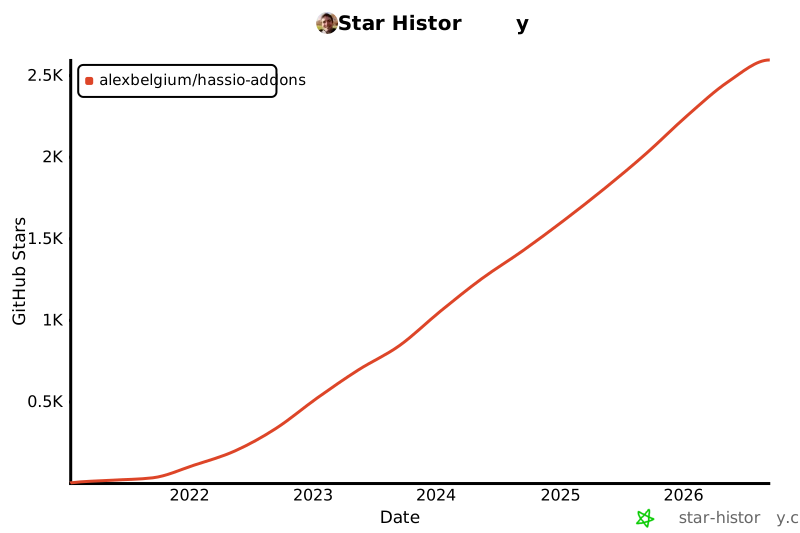](https://star-history.com/#alexbelgium/hassio-addons&Date)
|
||||
<a href="https://www.star-history.com/?type=date&repos=alexbelgium%2Fhassio-addons">
|
||||
<picture>
|
||||
<source media="(prefers-color-scheme: dark)" srcset="https://api.star-history.com/chart?repos=alexbelgium/hassio-addons&type=date&theme=dark&legend=top-left&sealed_token=Ft6D4rx2V8l-M626J7uFACNWFJexZTQuLZvFi-nQ_FnbQ0KFnkzPBnnQdui7CREsxlWJ5rdTXvx5PVjpFxxQwump2HCc5SDviHt_iZPdJB3ckWEjXp0V3w" />
|
||||
<source media="(prefers-color-scheme: light)" srcset="https://api.star-history.com/chart?repos=alexbelgium/hassio-addons&type=date&legend=top-left&sealed_token=Ft6D4rx2V8l-M626J7uFACNWFJexZTQuLZvFi-nQ_FnbQ0KFnkzPBnnQdui7CREsxlWJ5rdTXvx5PVjpFxxQwump2HCc5SDviHt_iZPdJB3ckWEjXp0V3w" />
|
||||
<img alt="Star History Chart" src="https://api.star-history.com/chart?repos=alexbelgium/hassio-addons&type=date&legend=top-left&sealed_token=Ft6D4rx2V8l-M626J7uFACNWFJexZTQuLZvFi-nQ_FnbQ0KFnkzPBnnQdui7CREsxlWJ5rdTXvx5PVjpFxxQwump2HCc5SDviHt_iZPdJB3ckWEjXp0V3w" />
|
||||
</picture>
|
||||
</a>
|
||||
|
||||
## Add-ons provided by this repository
|
||||
|
||||
|
||||
12
README.md
@@ -2,7 +2,7 @@
|
||||
|
||||
<!-- markdownlint-disable MD033 -->
|
||||
|
||||
## 💖 Support development
|
||||
## Support development
|
||||
|
||||
I maintain this and other Home Assistant add-ons in my free time: keeping up with upstream changes, HA changes, and testing on real hardware takes a lot of time (and some money). I use around 5-10 of my >110 addons so regularly I install test machines (and purchase some test services such as vpn) that I don't use myself to troubleshoot and improve the addons
|
||||
|
||||
@@ -70,9 +70,15 @@ If you want to do add the repository manually, please follow the procedure highl
|
||||
- amd64: 93%
|
||||
- aarch64: 7%
|
||||
|
||||
### Stars evolution
|
||||
### Star History
|
||||
|
||||
[](https://star-history.com/#alexbelgium/hassio-addons&Date)
|
||||
<a href="https://www.star-history.com/?type=date&repos=alexbelgium%2Fhassio-addons">
|
||||
<picture>
|
||||
<source media="(prefers-color-scheme: dark)" srcset="https://api.star-history.com/chart?repos=alexbelgium/hassio-addons&type=date&theme=dark&legend=top-left&sealed_token=Ft6D4rx2V8l-M626J7uFACNWFJexZTQuLZvFi-nQ_FnbQ0KFnkzPBnnQdui7CREsxlWJ5rdTXvx5PVjpFxxQwump2HCc5SDviHt_iZPdJB3ckWEjXp0V3w" />
|
||||
<source media="(prefers-color-scheme: light)" srcset="https://api.star-history.com/chart?repos=alexbelgium/hassio-addons&type=date&legend=top-left&sealed_token=Ft6D4rx2V8l-M626J7uFACNWFJexZTQuLZvFi-nQ_FnbQ0KFnkzPBnnQdui7CREsxlWJ5rdTXvx5PVjpFxxQwump2HCc5SDviHt_iZPdJB3ckWEjXp0V3w" />
|
||||
<img alt="Star History Chart" src="https://api.star-history.com/chart?repos=alexbelgium/hassio-addons&type=date&legend=top-left&sealed_token=Ft6D4rx2V8l-M626J7uFACNWFJexZTQuLZvFi-nQ_FnbQ0KFnkzPBnnQdui7CREsxlWJ5rdTXvx5PVjpFxxQwump2HCc5SDviHt_iZPdJB3ckWEjXp0V3w" />
|
||||
</picture>
|
||||
</a>
|
||||
|
||||
## Add-ons provided by this repository
|
||||
|
||||
|
||||

|
Before Width: | Height: | Size: 3.6 KiB After Width: | Height: | Size: 1.6 KiB |

|
Before Width: | Height: | Size: 2.5 KiB After Width: | Height: | Size: 1.2 KiB |
BIN
aurral/stats.png

|
Before Width: | Height: | Size: 2.8 KiB After Width: | Height: | Size: 1.4 KiB |

|
Before Width: | Height: | Size: 2.9 KiB After Width: | Height: | Size: 1.4 KiB |
BIN
baikal/stats.png

|
Before Width: | Height: | Size: 3.6 KiB After Width: | Height: | Size: 1.7 KiB |

|
Before Width: | Height: | Size: 3.3 KiB After Width: | Height: | Size: 1.6 KiB |
BIN
bazarr/stats.png

|
Before Width: | Height: | Size: 3.3 KiB After Width: | Height: | Size: 1.5 KiB |

|
Before Width: | Height: | Size: 2.3 KiB After Width: | Height: | Size: 1.3 KiB |
@@ -1,3 +1,8 @@
|
||||
## 0.0.101.1 (2026-08-08)
|
||||
- Fix broken builds: upstream retagged `:latest` to the v1.0.0 rewrite on 2026-07-31, so this add-on was building on an image its rootfs does not support. `build_from` is now pinned to `chrisleekr/binance-trading-bot:0.0.101`, the frozen v0 line this add-on targets.
|
||||
- This also resolves the `externally-managed-environment` (PEP 668) pip failure, which was a symptom of the same retag: the v1 image ships a much newer Alpine than the v0 line this add-on is built against.
|
||||
- Upstream tracking is paused: v1.0.0 is a complete rewrite with no in-place upgrade (datastore moved to Postgres + TimescaleDB), so it needs an add-on rewrite rather than a version bump.
|
||||
|
||||
- Added support for configuring extra environment variables via the `env_vars` add-on option alongside config.yaml. See https://github.com/alexbelgium/hassio-addons/wiki/Add-Environment-variables-to-your-Addon-2 for details.
|
||||
|
||||
## 0.0.101 (2025-06-13)
|
||||
|
||||
@@ -1,6 +1,6 @@
|
||||
{
|
||||
"build_from": {
|
||||
"aarch64": "chrisleekr/binance-trading-bot:latest",
|
||||
"amd64": "chrisleekr/binance-trading-bot:latest"
|
||||
"aarch64": "chrisleekr/binance-trading-bot:0.0.101",
|
||||
"amd64": "chrisleekr/binance-trading-bot:0.0.101"
|
||||
}
|
||||
}
|
||||
|
||||
@@ -115,4 +115,4 @@ schema:
|
||||
slug: binance-trading-bot
|
||||
udev: true
|
||||
url: https://github.com/alexbelgium/hassio-addons
|
||||
version: 0.0.101
|
||||
version: 0.0.101.1
|
||||
|
||||

|
Before Width: | Height: | Size: 3.7 KiB After Width: | Height: | Size: 1.7 KiB |
@@ -1,6 +1,7 @@
|
||||
{
|
||||
"github_beta": "true",
|
||||
"last_update": "13-06-2025",
|
||||
"last_update": "08-08-2026",
|
||||
"paused": true,
|
||||
"repository": "alexbelgium/hassio-addons",
|
||||
"slug": "binance-trading-bot",
|
||||
"source": "github",
|
||||
|
||||

|
Before Width: | Height: | Size: 2.2 KiB After Width: | Height: | Size: 1.2 KiB |

|
Before Width: | Height: | Size: 2.3 KiB After Width: | Height: | Size: 1.2 KiB |

|
Before Width: | Height: | Size: 4.5 KiB After Width: | Height: | Size: 1.9 KiB |

|
Before Width: | Height: | Size: 3.2 KiB After Width: | Height: | Size: 1.5 KiB |

|
Before Width: | Height: | Size: 3.1 KiB After Width: | Height: | Size: 1.4 KiB |

|
Before Width: | Height: | Size: 3.0 KiB After Width: | Height: | Size: 1.3 KiB |

|
Before Width: | Height: | Size: 2.8 KiB After Width: | Height: | Size: 1.3 KiB |

|
Before Width: | Height: | Size: 3.6 KiB After Width: | Height: | Size: 1.6 KiB |

|
Before Width: | Height: | Size: 3.9 KiB After Width: | Height: | Size: 1.6 KiB |

|
Before Width: | Height: | Size: 3.0 KiB After Width: | Height: | Size: 1.4 KiB |

|
Before Width: | Height: | Size: 2.5 KiB After Width: | Height: | Size: 1.4 KiB |

|
Before Width: | Height: | Size: 2.9 KiB After Width: | Height: | Size: 1.4 KiB |

|
Before Width: | Height: | Size: 3.3 KiB After Width: | Height: | Size: 1.5 KiB |
BIN
codex/stats.png

|
Before Width: | Height: | Size: 3.4 KiB After Width: | Height: | Size: 1.5 KiB |

|
Before Width: | Height: | Size: 3.2 KiB After Width: | Height: | Size: 1.5 KiB |

|
Before Width: | Height: | Size: 2.5 KiB After Width: | Height: | Size: 1.3 KiB |

|
Before Width: | Height: | Size: 3.5 KiB After Width: | Height: | Size: 1.6 KiB |
BIN
emby/stats.png

|
Before Width: | Height: | Size: 3.4 KiB After Width: | Height: | Size: 1.5 KiB |

|
Before Width: | Height: | Size: 3.0 KiB After Width: | Height: | Size: 1.4 KiB |

|
Before Width: | Height: | Size: 3.4 KiB After Width: | Height: | Size: 1.6 KiB |

|
Before Width: | Height: | Size: 3.6 KiB After Width: | Height: | Size: 1.7 KiB |
@@ -1,4 +1,7 @@
|
||||
|
||||
## 4.4.25 (2026-08-08)
|
||||
- Update to latest version from ente/ente (changelog : https://github.com/ente/ente/releases)
|
||||
- Fix build failure: upstream renamed the `ente-io` org to `ente`, so the base image is now `ghcr.io/ente/server` (GHCR does not follow the rename)
|
||||
|
||||
## 4.4.23 (2026-06-11)
|
||||
- Update to latest version from ente-io/ente (changelog : https://github.com/ente-io/ente/releases)
|
||||
## 1.7.24 (2026-06-05)
|
||||
|
||||
@@ -30,7 +30,7 @@ RUN set -eux; \
|
||||
|
||||
# Pull the web source
|
||||
WORKDIR /src
|
||||
RUN git clone --depth 1 --branch "${ENTE_WEB_TAG}" https://github.com/ente-io/ente.git .
|
||||
RUN git clone --depth 1 --branch "${ENTE_WEB_TAG}" https://github.com/ente/ente.git .
|
||||
|
||||
# Build web workspace (lives in ./web)
|
||||
WORKDIR /src/web
|
||||
@@ -52,7 +52,7 @@ RUN npm run build:memories
|
||||
#################
|
||||
# 1) Base image #
|
||||
#################
|
||||
FROM ghcr.io/ente-io/server:latest
|
||||
FROM ghcr.io/ente/server:latest
|
||||
|
||||
##################
|
||||
# 2) Tune image #
|
||||
|
||||
@@ -31,7 +31,7 @@ _Thanks to everyone having starred my repo! To star it click on the image below,
|
||||
|
||||
---
|
||||
|
||||
[Ente](https://github.com/ente-io/ente) is a self-hosted, end-to-end encrypted photo and video storage solution. This addon provides a complete Ente server setup including the museum API server and MinIO S3-compatible storage backend.
|
||||
[Ente](https://github.com/ente/ente) is a self-hosted, end-to-end encrypted photo and video storage solution. This addon provides a complete Ente server setup including the museum API server and MinIO S3-compatible storage backend.
|
||||
|
||||
Ente offers:
|
||||
- End-to-end encrypted photo and video backup
|
||||
@@ -41,7 +41,7 @@ Ente offers:
|
||||
- Album sharing with family and friends
|
||||
- Full control over your data with self-hosting
|
||||
|
||||
This addon is based on the official Ente server: https://github.com/ente-io/ente/tree/main/server
|
||||
This addon is based on the official Ente server: https://github.com/ente/ente/tree/main/server
|
||||
|
||||
## Configuration
|
||||
|
||||
|
||||
@@ -1,6 +1,6 @@
|
||||
{
|
||||
"build_from": {
|
||||
"aarch64": "ghcr.io/ente-io/server:927c6a316f181c7901446311f0085593b346b336",
|
||||
"amd64": "ghcr.io/ente-io/server:927c6a316f181c7901446311f0085593b346b336"
|
||||
"aarch64": "ghcr.io/ente/server:927c6a316f181c7901446311f0085593b346b336",
|
||||
"amd64": "ghcr.io/ente/server:927c6a316f181c7901446311f0085593b346b336"
|
||||
}
|
||||
}
|
||||
|
||||
@@ -131,6 +131,6 @@ schema:
|
||||
slug: ente
|
||||
udev: true
|
||||
url: https://github.com/alexbelgium/hassio-addons
|
||||
version: "4.4.23"
|
||||
version: "4.4.25"
|
||||
video: true
|
||||
webui: http://[HOST]:[PORT:3000]
|
||||
|
||||
BIN
ente/stats.png

|
Before Width: | Height: | Size: 2.8 KiB After Width: | Height: | Size: 1.5 KiB |
@@ -1,9 +1,9 @@
|
||||
{
|
||||
"github_beta": "false",
|
||||
"last_update": "2026-06-11",
|
||||
"last_update": "2026-08-08",
|
||||
"repository": "alexbelgium/hassio-addons",
|
||||
"slug": "ente",
|
||||
"source": "github",
|
||||
"upstream_repo": "ente-io/ente",
|
||||
"upstream_version": "4.4.23"
|
||||
"upstream_repo": "ente/ente",
|
||||
"upstream_version": "4.4.25"
|
||||
}
|
||||
|
||||

|
Before Width: | Height: | Size: 3.3 KiB After Width: | Height: | Size: 1.5 KiB |

|
Before Width: | Height: | Size: 3.6 KiB After Width: | Height: | Size: 1.6 KiB |

|
Before Width: | Height: | Size: 3.1 KiB After Width: | Height: | Size: 1.5 KiB |

|
Before Width: | Height: | Size: 3.0 KiB After Width: | Height: | Size: 1.4 KiB |

|
Before Width: | Height: | Size: 3.7 KiB After Width: | Height: | Size: 1.6 KiB |

|
Before Width: | Height: | Size: 4.1 KiB After Width: | Height: | Size: 1.8 KiB |

|
Before Width: | Height: | Size: 2.7 KiB After Width: | Height: | Size: 1.3 KiB |

|
Before Width: | Height: | Size: 3.0 KiB After Width: | Height: | Size: 1.3 KiB |

|
Before Width: | Height: | Size: 4.1 KiB After Width: | Height: | Size: 1.8 KiB |

|
Before Width: | Height: | Size: 3.4 KiB After Width: | Height: | Size: 1.6 KiB |
BIN
gitea/stats.png

|
Before Width: | Height: | Size: 3.0 KiB After Width: | Height: | Size: 1.4 KiB |

|
Before Width: | Height: | Size: 3.2 KiB After Width: | Height: | Size: 1.5 KiB |
BIN
grav/stats.png

|
Before Width: | Height: | Size: 3.6 KiB After Width: | Height: | Size: 1.6 KiB |

|
Before Width: | Height: | Size: 3.5 KiB After Width: | Height: | Size: 1.6 KiB |
BIN
immich/stats.png

|
Before Width: | Height: | Size: 3.0 KiB After Width: | Height: | Size: 1.3 KiB |

|
Before Width: | Height: | Size: 3.0 KiB After Width: | Height: | Size: 1.5 KiB |

|
Before Width: | Height: | Size: 3.2 KiB After Width: | Height: | Size: 1.5 KiB |

|
Before Width: | Height: | Size: 2.8 KiB After Width: | Height: | Size: 1.3 KiB |

|
Before Width: | Height: | Size: 3.2 KiB After Width: | Height: | Size: 1.4 KiB |

|
Before Width: | Height: | Size: 3.1 KiB After Width: | Height: | Size: 1.4 KiB |
BIN
inadyn/stats.png

|
Before Width: | Height: | Size: 3.4 KiB After Width: | Height: | Size: 1.6 KiB |

|
Before Width: | Height: | Size: 2.9 KiB After Width: | Height: | Size: 1.3 KiB |
BIN
joal/stats.png

|
Before Width: | Height: | Size: 3.5 KiB After Width: | Height: | Size: 1.6 KiB |
BIN
joplin/stats.png

|
Before Width: | Height: | Size: 3.4 KiB After Width: | Height: | Size: 1.6 KiB |
BIN
kometa/stats.png

|
Before Width: | Height: | Size: 3.1 KiB After Width: | Height: | Size: 1.5 KiB |
6
komga/CHANGELOG.md
Normal file
@@ -0,0 +1,6 @@
|
||||
## 1.26.1 (2026-08-11)
|
||||
|
||||
- Initial release, based on gotson/komga ([changelog](https://github.com/gotson/komga/releases))
|
||||
- Ingress support : Komga is served on the `/komga` servlet context path, nginx prefixes it back with the ingress entry
|
||||
- Supports local disks and SMB network shares for libraries (`localdisks` / `networkdisks` options)
|
||||
- Supports extra environment variables via the `env_vars` option, see the [documentation](https://github.com/alexbelgium/hassio-addons/wiki/Add-Environment-variables-to-your-Addon-2)
|
||||
121
komga/Dockerfile
Normal file
@@ -0,0 +1,121 @@
|
||||
#============================#
|
||||
# ALEXBELGIUM'S DOCKERFILE #
|
||||
#============================#
|
||||
# _.------.
|
||||
# _.-` ('>.-`"""-.
|
||||
# '.--'` _'` _ .--.)
|
||||
# -' '-.-';` `
|
||||
# ' - _.' ``'--.
|
||||
# '---` .-'""`
|
||||
# /`
|
||||
#=== Home Assistant Addon ===#
|
||||
|
||||
#################
|
||||
# 1 Build Image #
|
||||
#################
|
||||
|
||||
ARG BUILD_FROM
|
||||
ARG BUILD_VERSION
|
||||
ARG BUILD_UPSTREAM="1.26.1"
|
||||
FROM ${BUILD_FROM}
|
||||
ENV BASHIO_VERSION=0.14.3
|
||||
|
||||
##################
|
||||
# 2 Modify Image #
|
||||
##################
|
||||
|
||||
# No S6_* tuning here : the upstream image ships no s6-overlay, so the vars the
|
||||
# other addons set would be read by nobody
|
||||
|
||||
# Komga is served from a fixed servlet context path. Ingress strips its own
|
||||
# prefix before forwarding, and Komga renders absolute asset urls, so nginx
|
||||
# needs a stable subpath to prefix back. See rootfs/etc/nginx/servers/ingress.conf
|
||||
ENV SERVER_SERVLET_CONTEXTPATH="/komga"
|
||||
|
||||
##################
|
||||
# 3 Install apps #
|
||||
##################
|
||||
|
||||
# Add rootfs
|
||||
# Absolute paths on purpose : the upstream image sets WORKDIR /app, so the
|
||||
# relative "find ." used by the other addons would miss /etc entirely
|
||||
COPY rootfs/ /
|
||||
RUN find /etc/cont-init.d /etc/services.d -type f \( -name "*.sh" -o -name "run" \) -print -exec chmod +x {} \;
|
||||
|
||||
# Uses /bin for compatibility purposes
|
||||
# hadolint ignore=DL4005
|
||||
RUN if [ ! -f /bin/sh ] && [ -f /usr/bin/sh ]; then ln -s /usr/bin/sh /bin/sh; fi && \
|
||||
if [ ! -f /bin/bash ] && [ -f /usr/bin/bash ]; then ln -s /usr/bin/bash /bin/bash; fi
|
||||
|
||||
# Modules
|
||||
ARG MODULES="00-banner.sh 00-global_var.sh 01-custom_script.sh 00-local_mounts.sh 00-smb_mounts.sh"
|
||||
|
||||
# Automatic modules download
|
||||
COPY ha_automodules.sh /ha_automodules.sh
|
||||
RUN chmod 744 /ha_automodules.sh && /ha_automodules.sh "$MODULES" && rm /ha_automodules.sh
|
||||
|
||||
# Manual apps
|
||||
ENV PACKAGES="nginx"
|
||||
|
||||
# Automatic apps & bashio
|
||||
COPY ha_autoapps.sh /ha_autoapps.sh
|
||||
RUN chmod 744 /ha_autoapps.sh && /ha_autoapps.sh "$PACKAGES" && rm /ha_autoapps.sh
|
||||
|
||||
################
|
||||
# 4 Entrypoint #
|
||||
################
|
||||
|
||||
# The upstream image is a plain jre image without s6-overlay, so ha_entrypoint
|
||||
# runs as pid 1 : it executes /etc/cont-init.d, then supervises /etc/services.d
|
||||
COPY ha_entrypoint.sh /ha_entrypoint.sh
|
||||
RUN chmod 777 /ha_entrypoint.sh
|
||||
ENTRYPOINT ["/ha_entrypoint.sh"]
|
||||
|
||||
# Install bashio
|
||||
COPY bashio-standalone.sh /usr/local/lib/bashio-standalone.sh
|
||||
RUN chmod 0755 /usr/local/lib/bashio-standalone.sh
|
||||
|
||||
############
|
||||
# 5 Labels #
|
||||
############
|
||||
|
||||
ARG BUILD_ARCH
|
||||
ARG BUILD_DATE
|
||||
ARG BUILD_DESCRIPTION
|
||||
ARG BUILD_NAME
|
||||
ARG BUILD_REF
|
||||
ARG BUILD_REPOSITORY
|
||||
ARG BUILD_VERSION
|
||||
ENV BUILD_VERSION="${BUILD_VERSION}"
|
||||
LABEL \
|
||||
io.hass.name="${BUILD_NAME}" \
|
||||
io.hass.description="${BUILD_DESCRIPTION}" \
|
||||
io.hass.arch="${BUILD_ARCH}" \
|
||||
io.hass.type="addon" \
|
||||
io.hass.version=${BUILD_VERSION} \
|
||||
maintainer="alexbelgium (https://github.com/alexbelgium)" \
|
||||
org.opencontainers.image.title="${BUILD_NAME}" \
|
||||
org.opencontainers.image.description="${BUILD_DESCRIPTION}" \
|
||||
org.opencontainers.image.vendor="Home Assistant Add-ons" \
|
||||
org.opencontainers.image.authors="alexbelgium (https://github.com/alexbelgium)" \
|
||||
org.opencontainers.image.licenses="MIT" \
|
||||
org.opencontainers.image.url="https://github.com/alexbelgium" \
|
||||
org.opencontainers.image.source="https://github.com/${BUILD_REPOSITORY}" \
|
||||
org.opencontainers.image.documentation="https://github.com/${BUILD_REPOSITORY}/blob/main/README.md" \
|
||||
org.opencontainers.image.created=${BUILD_DATE} \
|
||||
org.opencontainers.image.revision=${BUILD_REF} \
|
||||
org.opencontainers.image.version=${BUILD_VERSION}
|
||||
|
||||
#################
|
||||
# 6 Healthcheck #
|
||||
#################
|
||||
|
||||
# Komga is a jvm app, first boot builds the database : leave it time to settle
|
||||
ENV HEALTH_PORT="25600" \
|
||||
HEALTH_URL="/komga/"
|
||||
HEALTHCHECK \
|
||||
--interval=30s \
|
||||
--retries=5 \
|
||||
--start-period=180s \
|
||||
--timeout=25s \
|
||||
CMD curl -A "HealthCheck: Docker/1.0" -s -f "http://127.0.0.1:${HEALTH_PORT}${HEALTH_URL}" >/dev/null 2>&1 || exit 1
|
||||
70
komga/README.md
Normal file
@@ -0,0 +1,70 @@
|
||||
# Home Assistant Add-on: Komga
|
||||
|
||||
Free and open source comics/mangas media server.
|
||||
|
||||
[Komga](https://komga.org) organizes your comics, mangas, BDs, magazines and ebooks, serves them
|
||||
through a web reader, and exposes OPDS, Kobo sync and a REST API for third-party readers
|
||||
(Tachiyomi/Mihon, Panels, Chunky, ...).
|
||||
|
||||
## About
|
||||
|
||||
- Browse and read CBZ, CBR, PDF and EPUB files from any browser
|
||||
- Import metadata, edit series/books, build collections and read lists
|
||||
- Multi-user, with per-user library restrictions and age ratings
|
||||
- OPDS v1/v2, Kobo sync, and a documented REST API
|
||||
|
||||
## Installation
|
||||
|
||||
1. Add this repository to Home Assistant.
|
||||
2. Install the **Komga** add-on.
|
||||
3. Start the add-on and open it from the sidebar (ingress), or on port `25600` at
|
||||
`http://homeassistant:25600/komga`.
|
||||
4. Create the initial user account when the web interface asks for it.
|
||||
5. Add a library pointing at your comics, for example `/media/comics` or `/share/comics`.
|
||||
|
||||
The first start takes longer than usual: Komga is a JVM application and builds its database and
|
||||
search index on first boot.
|
||||
|
||||
## Configuration
|
||||
|
||||
| Option | Description |
|
||||
|--------|-------------|
|
||||
| `PUID` / `PGID` | Ownership applied to the add-on configuration directory. Defaults to `0` (root). |
|
||||
| `TZ` | Timezone, e.g. `Europe/Paris`. |
|
||||
| `localdisks` | Local disks to mount, e.g. `sda1` or a disk label. |
|
||||
| `networkdisks` | SMB shares to mount, e.g. `//192.168.1.2/comics`. Mounted under `/mnt`. |
|
||||
| `cifsusername` / `cifspassword` / `cifsdomain` | Credentials for the SMB shares. |
|
||||
| `smbv1` | Allow the legacy SMBv1 protocol. |
|
||||
| `env_vars` | Extra environment variables passed to Komga. See the [wiki](https://github.com/alexbelgium/hassio-addons/wiki/Add-Environment-variables-to-your-Addon-2). |
|
||||
|
||||
Most Komga settings can be passed through `env_vars` using the upstream naming, see the
|
||||
[Komga configuration options](https://komga.org/docs/installation/configuration/). A common one:
|
||||
|
||||
- `JAVA_TOOL_OPTIONS` = `-Xmx1g` — cap the JVM heap on small machines.
|
||||
|
||||
`SERVER_SERVLET_CONTEXTPATH` and `SERVER_PORT` are reserved by the add-on: ingress is built
|
||||
around the `/komga` path on port 25600, and overriding either breaks the sidebar panel.
|
||||
|
||||
## Ingress and URLs
|
||||
|
||||
Komga is served from the `/komga` subpath so that it works behind Home Assistant ingress:
|
||||
|
||||
- from the Home Assistant sidebar: ingress, no extra setup
|
||||
- directly: `http://homeassistant:25600/komga`
|
||||
|
||||
External clients — OPDS readers, Kobo sync, Tachiyomi/Mihon, Panels — must use the direct
|
||||
`http://homeassistant:25600/komga` url. Ingress is browser-session based, so those clients cannot
|
||||
authenticate through it.
|
||||
|
||||
|
||||
## Data
|
||||
|
||||
Komga's database, logs and search index live in `/config` inside the add-on, which Home Assistant
|
||||
maps to this add-on's own configuration directory — `/addon_configs/<repository_id>_komga`, browsable
|
||||
with the Filebrowser add-on. They survive add-on updates. Libraries stay where you put them, under
|
||||
`/media`, `/share` or a mounted disk.
|
||||
|
||||
## Support
|
||||
|
||||
- [Komga upstream project](https://github.com/gotson/komga)
|
||||
- [Add-on repository issues](https://github.com/alexbelgium/hassio-addons/issues)
|
||||
6
komga/build.json
Normal file
@@ -0,0 +1,6 @@
|
||||
{
|
||||
"build_from": {
|
||||
"aarch64": "gotson/komga:1.26.1",
|
||||
"amd64": "gotson/komga:1.26.1"
|
||||
}
|
||||
}
|
||||
104
komga/config.yaml
Normal file
@@ -0,0 +1,104 @@
|
||||
arch:
|
||||
- aarch64
|
||||
- amd64
|
||||
description: Free and open source comics/mangas media server
|
||||
devices:
|
||||
- /dev/dri
|
||||
- /dev/dri/card0
|
||||
- /dev/dri/card1
|
||||
- /dev/dri/renderD128
|
||||
- /dev/vchiq
|
||||
- /dev/video10
|
||||
- /dev/video11
|
||||
- /dev/video12
|
||||
- /dev/video13
|
||||
- /dev/video14
|
||||
- /dev/video15
|
||||
- /dev/video16
|
||||
- /dev/ttyUSB0
|
||||
- /dev/sda
|
||||
- /dev/sdb
|
||||
- /dev/sdc
|
||||
- /dev/sdd
|
||||
- /dev/sde
|
||||
- /dev/sdf
|
||||
- /dev/sdg
|
||||
- /dev/nvme
|
||||
- /dev/nvme0
|
||||
- /dev/nvme0n1
|
||||
- /dev/nvme0n1p1
|
||||
- /dev/nvme0n1p2
|
||||
- /dev/nvme0n1p3
|
||||
- /dev/nvme1n1
|
||||
- /dev/nvme1n1p1
|
||||
- /dev/nvme1n1p2
|
||||
- /dev/nvme1n1p3
|
||||
- /dev/nvme2n1
|
||||
- /dev/nvme2n1p1
|
||||
- /dev/nvme2n1p2
|
||||
- /dev/nvme2n3p3
|
||||
- /dev/mmcblk
|
||||
- /dev/fuse
|
||||
- /dev/sda1
|
||||
- /dev/sdb1
|
||||
- /dev/sdc1
|
||||
- /dev/sdd1
|
||||
- /dev/sde1
|
||||
- /dev/sdf1
|
||||
- /dev/sdg1
|
||||
- /dev/sda2
|
||||
- /dev/sdb2
|
||||
- /dev/sdc2
|
||||
- /dev/sdd2
|
||||
- /dev/sde2
|
||||
- /dev/sdf2
|
||||
- /dev/sdg2
|
||||
- /dev/sda3
|
||||
- /dev/sdb3
|
||||
- /dev/sda4
|
||||
- /dev/sdb4
|
||||
- /dev/sda5
|
||||
- /dev/sda6
|
||||
- /dev/sda7
|
||||
- /dev/sda8
|
||||
- /dev/nvme0
|
||||
- /dev/nvme1
|
||||
- /dev/nvme2
|
||||
image: ghcr.io/alexbelgium/komga-{arch}
|
||||
ingress: true
|
||||
ingress_entry: komga
|
||||
init: false
|
||||
map:
|
||||
- addon_config:rw
|
||||
- media:rw
|
||||
- share:rw
|
||||
name: Komga
|
||||
options:
|
||||
env_vars: []
|
||||
PGID: 0
|
||||
PUID: 0
|
||||
panel_icon: mdi:book-open-page-variant
|
||||
ports:
|
||||
25600/tcp: 25600
|
||||
ports_description:
|
||||
25600/tcp: Web interface (path /komga)
|
||||
privileged:
|
||||
- SYS_ADMIN
|
||||
- DAC_READ_SEARCH
|
||||
schema:
|
||||
env_vars:
|
||||
- name: match(^[A-Za-z0-9_]+$)
|
||||
value: str?
|
||||
PGID: int
|
||||
PUID: int
|
||||
TZ: str?
|
||||
cifsdomain: str?
|
||||
cifspassword: str?
|
||||
cifsusername: str?
|
||||
localdisks: str?
|
||||
networkdisks: str?
|
||||
smbv1: bool?
|
||||
slug: komga
|
||||
udev: true
|
||||
url: https://github.com/alexbelgium/hassio-addons/tree/master/komga
|
||||
version: "1.26.1"
|
||||
BIN
komga/icon.png
Normal file

|
After Width: | Height: | Size: 7.9 KiB |
BIN
komga/logo.png
Normal file

|
After Width: | Height: | Size: 43 KiB |
15
komga/rootfs/etc/cont-init.d/20-config_location.sh
Executable file
@@ -0,0 +1,15 @@
|
||||
#!/usr/bin/with-contenv bashio
|
||||
# shellcheck shell=bash
|
||||
set -e
|
||||
|
||||
# Komga stores its database, logs and search index in KOMGA_CONFIGDIR, which the
|
||||
# upstream image sets to /config -- that is the addon_config mount
|
||||
|
||||
CONFIG_LOCATION="/config"
|
||||
bashio::log.info "Config stored in $CONFIG_LOCATION"
|
||||
|
||||
mkdir -p "$CONFIG_LOCATION"
|
||||
# Numbered 20- on purpose : it must sort after 00-global_var.sh, which is what
|
||||
# exports PUID/PGID from the addon options. The upstream image sets neither, so
|
||||
# the fallbacks only apply when the module is absent.
|
||||
chown -R "${PUID:-0}:${PGID:-0}" "$CONFIG_LOCATION"
|
||||
17
komga/rootfs/etc/cont-init.d/32-nginx_ingress.sh
Executable file
@@ -0,0 +1,17 @@
|
||||
#!/usr/bin/with-contenv bashio
|
||||
# shellcheck shell=bash
|
||||
set -e
|
||||
|
||||
#################
|
||||
# NGINX SETTING #
|
||||
#################
|
||||
declare ingress_interface
|
||||
declare ingress_port
|
||||
declare ingress_entry
|
||||
|
||||
ingress_port=$(bashio::addon.ingress_port)
|
||||
ingress_interface=$(bashio::addon.ip_address)
|
||||
ingress_entry=$(bashio::addon.ingress_entry)
|
||||
sed -i "s/%%port%%/${ingress_port}/g" /etc/nginx/servers/ingress.conf
|
||||
sed -i "s/%%interface%%/${ingress_interface}/g" /etc/nginx/servers/ingress.conf
|
||||
sed -i "s|%%ingress_entry%%|${ingress_entry}|g" /etc/nginx/servers/ingress.conf
|
||||
96
komga/rootfs/etc/nginx/includes/mime.types
Normal file
@@ -0,0 +1,96 @@
|
||||
types {
|
||||
text/html html htm shtml;
|
||||
text/css css;
|
||||
text/xml xml;
|
||||
image/gif gif;
|
||||
image/jpeg jpeg jpg;
|
||||
application/javascript js;
|
||||
application/atom+xml atom;
|
||||
application/rss+xml rss;
|
||||
|
||||
text/mathml mml;
|
||||
text/plain txt;
|
||||
text/vnd.sun.j2me.app-descriptor jad;
|
||||
text/vnd.wap.wml wml;
|
||||
text/x-component htc;
|
||||
|
||||
image/png png;
|
||||
image/svg+xml svg svgz;
|
||||
image/tiff tif tiff;
|
||||
image/vnd.wap.wbmp wbmp;
|
||||
image/webp webp;
|
||||
image/x-icon ico;
|
||||
image/x-jng jng;
|
||||
image/x-ms-bmp bmp;
|
||||
|
||||
font/woff woff;
|
||||
font/woff2 woff2;
|
||||
|
||||
application/java-archive jar war ear;
|
||||
application/json json;
|
||||
application/mac-binhex40 hqx;
|
||||
application/msword doc;
|
||||
application/pdf pdf;
|
||||
application/postscript ps eps ai;
|
||||
application/rtf rtf;
|
||||
application/vnd.apple.mpegurl m3u8;
|
||||
application/vnd.google-earth.kml+xml kml;
|
||||
application/vnd.google-earth.kmz kmz;
|
||||
application/vnd.ms-excel xls;
|
||||
application/vnd.ms-fontobject eot;
|
||||
application/vnd.ms-powerpoint ppt;
|
||||
application/vnd.oasis.opendocument.graphics odg;
|
||||
application/vnd.oasis.opendocument.presentation odp;
|
||||
application/vnd.oasis.opendocument.spreadsheet ods;
|
||||
application/vnd.oasis.opendocument.text odt;
|
||||
application/vnd.openxmlformats-officedocument.presentationml.presentation
|
||||
pptx;
|
||||
application/vnd.openxmlformats-officedocument.spreadsheetml.sheet
|
||||
xlsx;
|
||||
application/vnd.openxmlformats-officedocument.wordprocessingml.document
|
||||
docx;
|
||||
application/vnd.wap.wmlc wmlc;
|
||||
application/x-7z-compressed 7z;
|
||||
application/x-cocoa cco;
|
||||
application/x-java-archive-diff jardiff;
|
||||
application/x-java-jnlp-file jnlp;
|
||||
application/x-makeself run;
|
||||
application/x-perl pl pm;
|
||||
application/x-pilot prc pdb;
|
||||
application/x-rar-compressed rar;
|
||||
application/x-redhat-package-manager rpm;
|
||||
application/x-sea sea;
|
||||
application/x-shockwave-flash swf;
|
||||
application/x-stuffit sit;
|
||||
application/x-tcl tcl tk;
|
||||
application/x-x509-ca-cert der pem crt;
|
||||
application/x-xpinstall xpi;
|
||||
application/xhtml+xml xhtml;
|
||||
application/xspf+xml xspf;
|
||||
application/zip zip;
|
||||
|
||||
application/octet-stream bin exe dll;
|
||||
application/octet-stream deb;
|
||||
application/octet-stream dmg;
|
||||
application/octet-stream iso img;
|
||||
application/octet-stream msi msp msm;
|
||||
|
||||
audio/midi mid midi kar;
|
||||
audio/mpeg mp3;
|
||||
audio/ogg ogg;
|
||||
audio/x-m4a m4a;
|
||||
audio/x-realaudio ra;
|
||||
|
||||
video/3gpp 3gpp 3gp;
|
||||
video/mp2t ts;
|
||||
video/mp4 mp4;
|
||||
video/mpeg mpeg mpg;
|
||||
video/quicktime mov;
|
||||
video/webm webm;
|
||||
video/x-flv flv;
|
||||
video/x-m4v m4v;
|
||||
video/x-mng mng;
|
||||
video/x-ms-asf asx asf;
|
||||
video/x-ms-wmv wmv;
|
||||
video/x-msvideo avi;
|
||||
}
|
||||
1
komga/rootfs/etc/nginx/includes/resolver.conf
Normal file
@@ -0,0 +1 @@
|
||||
resolver 127.0.0.11 ipv6=off;
|
||||
56
komga/rootfs/etc/nginx/nginx.conf
Normal file
@@ -0,0 +1,56 @@
|
||||
|
||||
# Run nginx in foreground.
|
||||
daemon off;
|
||||
|
||||
# This is run inside Docker.
|
||||
user root;
|
||||
|
||||
# Pid storage location.
|
||||
pid /var/run/nginx.pid;
|
||||
|
||||
# Set number of worker processes.
|
||||
worker_processes 1;
|
||||
|
||||
# Enables the use of JIT for regular expressions to speed-up their processing.
|
||||
pcre_jit on;
|
||||
|
||||
# Write error log to Hass.io add-on log.
|
||||
error_log /proc/1/fd/1 error;
|
||||
|
||||
# Load allowed environment vars
|
||||
env HASSIO_TOKEN;
|
||||
|
||||
# Load dynamic modules.
|
||||
include /etc/nginx/modules-enabled/*.conf;
|
||||
|
||||
# Max num of simultaneous connections by a worker process.
|
||||
events {
|
||||
worker_connections 512;
|
||||
}
|
||||
|
||||
http {
|
||||
include /etc/nginx/includes/mime.types;
|
||||
|
||||
log_format hassio '[$time_local] $status '
|
||||
'$http_x_forwarded_for($remote_addr) '
|
||||
'$request ($http_user_agent)';
|
||||
|
||||
access_log /proc/1/fd/1 hassio;
|
||||
client_max_body_size 4G;
|
||||
default_type application/octet-stream;
|
||||
gzip on;
|
||||
keepalive_timeout 65;
|
||||
sendfile on;
|
||||
server_tokens off;
|
||||
tcp_nodelay on;
|
||||
tcp_nopush on;
|
||||
|
||||
map $http_upgrade $connection_upgrade {
|
||||
default upgrade;
|
||||
'' close;
|
||||
}
|
||||
|
||||
include /etc/nginx/includes/resolver.conf;
|
||||
|
||||
include /etc/nginx/servers/*.conf;
|
||||
}
|
||||
60
komga/rootfs/etc/nginx/servers/ingress.conf
Normal file
@@ -0,0 +1,60 @@
|
||||
server {
|
||||
listen %%interface%%:%%port%% default_server;
|
||||
|
||||
client_max_body_size 0;
|
||||
|
||||
# Home Assistant opens the ingress panel at <ingress_entry>/ and forwards it
|
||||
# as / , but Komga only answers below its servlet context path (/komga), so
|
||||
# bounce the panel there. absolute_redirect off keeps the Location relative
|
||||
# to the HA host instead of nginx's own listen address.
|
||||
location = / {
|
||||
absolute_redirect off;
|
||||
return 302 %%ingress_entry%%/komga/;
|
||||
}
|
||||
|
||||
location / {
|
||||
add_header Access-Control-Allow-Origin *;
|
||||
proxy_connect_timeout 30m;
|
||||
proxy_send_timeout 30m;
|
||||
proxy_read_timeout 30m;
|
||||
proxy_pass http://127.0.0.1:25600;
|
||||
|
||||
# Komga pushes live events over SSE (/komga/sse/v1/events), which must
|
||||
# not be buffered or the UI stops refreshing until the buffer fills
|
||||
proxy_buffering off;
|
||||
proxy_http_version 1.1;
|
||||
proxy_set_header Upgrade $http_upgrade;
|
||||
proxy_set_header Connection $connection_upgrade;
|
||||
|
||||
# Spring redirects /komga to /komga/ ; the Location it produces is
|
||||
# absolute against the upstream address, so rewrite it back onto the
|
||||
# ingress path (the second rule covers an already relative Location).
|
||||
absolute_redirect off;
|
||||
proxy_redirect http://127.0.0.1:25600/ %%ingress_entry%%/;
|
||||
proxy_redirect / %%ingress_entry%%/;
|
||||
|
||||
# Komga renders its index page with Thymeleaf @{...} link expressions,
|
||||
# so every asset url and window.resourceBaseUrl carry the context path
|
||||
# (/komga). Ingress strips its own prefix before forwarding, so the
|
||||
# browser needs that prefix added back. Only text/html is rewritten
|
||||
# (the nginx default for sub_filter_types) : the SPA derives its api
|
||||
# origin and router base from resourceBaseUrl at runtime, so json
|
||||
# responses and book pages stream through untouched.
|
||||
proxy_set_header Accept-Encoding "";
|
||||
sub_filter_once off;
|
||||
sub_filter "/komga" "%%ingress_entry%%/komga";
|
||||
|
||||
# The epub/divina reader fetches a Readium manifest whose links Komga
|
||||
# builds with ServletUriComponentsBuilder.fromCurrentContextPath(), so
|
||||
# they are fully absolute against the upstream address nginx talks to
|
||||
# (http://127.0.0.1:25600/komga). Rewriting them to a root relative
|
||||
# ingress path also fixes the scheme : Home Assistant may be served over
|
||||
# https, and an absolute http:// link would be blocked as mixed content.
|
||||
# Only the json/xml document types are added here, so book pages are
|
||||
# never scanned.
|
||||
sub_filter "http://127.0.0.1:25600/komga" "%%ingress_entry%%/komga";
|
||||
sub_filter_types application/json application/webpub+json
|
||||
application/divina+json application/opds+json
|
||||
application/atom+xml;
|
||||
}
|
||||
}
|
||||
17
komga/rootfs/etc/services.d/komga/run
Executable file
@@ -0,0 +1,17 @@
|
||||
#!/usr/bin/with-contenv bashio
|
||||
# shellcheck shell=bash
|
||||
set -e
|
||||
# ==============================================================================
|
||||
|
||||
# Same invocation as the upstream image entrypoint (gotson/komga), which is
|
||||
# replaced by ha_entrypoint.sh so that cont-init.d and nginx can run too.
|
||||
# SERVER_SERVLET_CONTEXTPATH is set in the Dockerfile, see ingress.conf.
|
||||
|
||||
bashio::log.info "Starting Komga (served on the /komga path, see the addon documentation)"
|
||||
|
||||
cd /app
|
||||
exec java \
|
||||
-Dspring.profiles.include=docker \
|
||||
--enable-native-access=ALL-UNNAMED \
|
||||
-jar application.jar \
|
||||
--spring.config.additional-location=file:/config/
|
||||
30
komga/rootfs/etc/services.d/nginx/run
Executable file
@@ -0,0 +1,30 @@
|
||||
#!/usr/bin/with-contenv bashio
|
||||
# shellcheck shell=bash
|
||||
set -e
|
||||
# ==============================================================================
|
||||
|
||||
# Wait for komga to answer before nginx starts serving ingress. First boot
|
||||
# builds the database, so leave a wide margin, but poll rather than call
|
||||
# bashio::net.wait_for : bashio takes (port host timeout) while the bundled
|
||||
# bashio-standalone.sh takes (host port timeout), and picking the wrong one
|
||||
# would either fail instantly or block for the whole timeout.
|
||||
# The per probe timeouts keep the 15 minute ceiling real : without them a
|
||||
# half open connection would hang a single probe, and the loop, forever.
|
||||
komga_ready=false
|
||||
for _ in $(seq 1 180); do
|
||||
if curl -sf --connect-timeout 2 --max-time 5 -o /dev/null "http://127.0.0.1:25600/komga/"; then
|
||||
komga_ready=true
|
||||
break
|
||||
fi
|
||||
sleep 5
|
||||
done
|
||||
|
||||
# Deliberately not fatal : nginx serving a 502 tells the user something is wrong
|
||||
# and starts working by itself once komga finally answers, while refusing to
|
||||
# start would take ingress down for good after ha_entrypoint gives up retrying.
|
||||
if [ "$komga_ready" != true ]; then
|
||||
bashio::log.warning "Komga did not answer within 15 minutes. Starting NGinx anyway : ingress will return 502 until it does."
|
||||
fi
|
||||
|
||||
bashio::log.info "Starting NGinx..."
|
||||
exec nginx
|
||||
9
komga/updater.json
Normal file
@@ -0,0 +1,9 @@
|
||||
{
|
||||
"github_beta": "false",
|
||||
"last_update": "2026-08-11",
|
||||
"repository": "alexbelgium/hassio-addons",
|
||||
"slug": "komga",
|
||||
"source": "github",
|
||||
"upstream_repo": "gotson/komga",
|
||||
"upstream_version": "1.26.1"
|
||||
}
|
||||

|
Before Width: | Height: | Size: 3.6 KiB After Width: | Height: | Size: 1.6 KiB |
BIN
lidarr/stats.png

|
Before Width: | Height: | Size: 3.4 KiB After Width: | Height: | Size: 1.6 KiB |

|
Before Width: | Height: | Size: 3.3 KiB After Width: | Height: | Size: 1.6 KiB |